Like many other CNC machining shops, PTD Metalworking Professionals (PTD) has seen lead times for their forging requirements creep out to a point where they became concerning. Three years ago, the Anderbolt, Boksburg-based company had a staff compliment of 52. This has now grown to over 150 as the company has seen a commendable period of growth. With this growth comes pressure not only from clients but also on suppliers, delivery times, organisational structures and many other aspects of running a successful business that has an emphasis on CNC machining.
“Our diversified range of clients have grown exponentially and we have also acquired new clients. To accommodate their requirements, we have invested heavily in new CNC equipment, mainly lathes, and expanded our shop floor space,” explained Jessé Bohn, a director and grandson of one of the original owners that established the company in 1974.
“We have been very careful to look at all aspects of the business and pay attention and add to areas that will add value and assist during this growth period. From the machines to the shop floor flow, the company culture and work ethic – all areas that we can be in control of. Our suppliers have also been great and assisted wherever possible.”
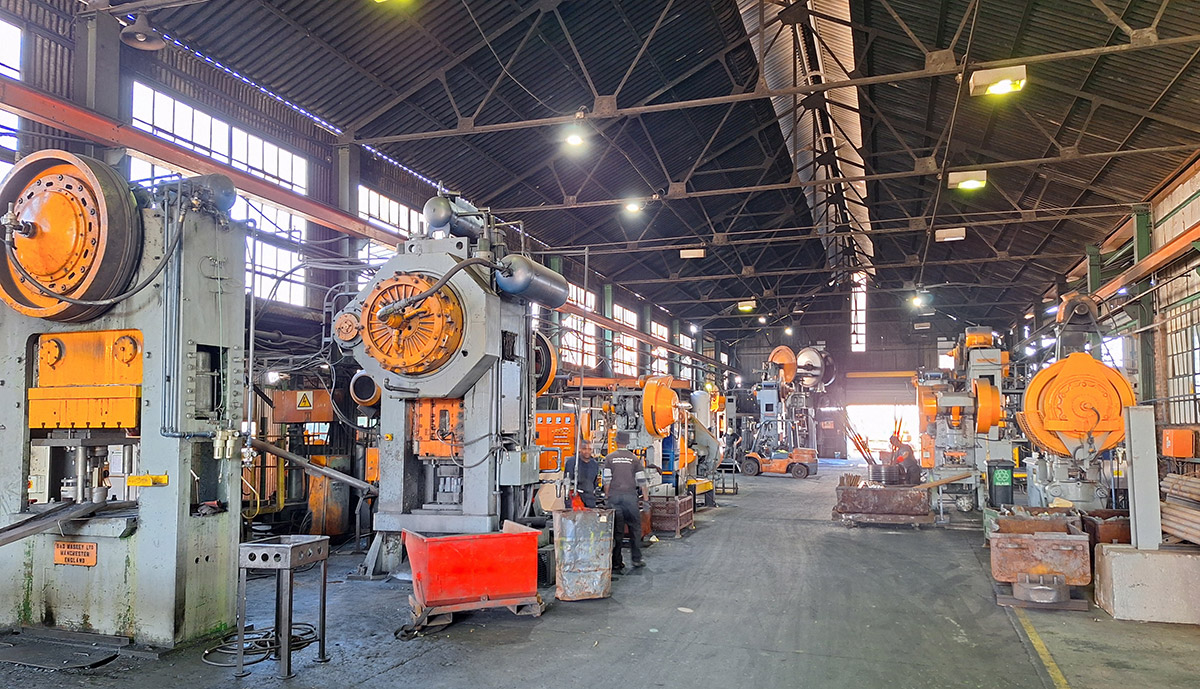
PTD Metalworking Professionals acquired Trojan Manufacturing, Forging and Automotive in December 2025. The company has historical links with African Hoe and AH Forgings
“Being a young management team, we have also been hungry to diversify, expand and raise the bar wherever we can. We like to turn pressures into strengths, using technology, culture and strategy to compete.”
“So when we heard that a forging business was for sale we quickly investigated the possibility of acquiring it. Forgings do make up a mentionable amount of our material supplies. We know that forgings can yield better machine performance and part quality, depending on the component.”
“Casting and forging are popular metal forming processes used to create parts and components for a variety of industries. However, these processes are very different from each other, and yield products with varying characteristics. The difference between forged and cast metal comes down to manufacturing. Casting pours molten metal into a mould, while forging hammers solid metal into shape. Forging creates superior strength and durability, whereas casting excels at complex shapes and lower costs.”
“Forging uses dies, pressure, and temperature to shape a solid piece of round metal bar into a shape. There are three ways forging can be classified: 1) temperature (hot, warm, or cold forging), 2) type of process (open or closed die forging), or 3) material used (steel forging, aluminium forging, brass forging, or bronze forging).”
“To summarise, castings are melted, poured, and solidified, while forgings are physically forced into a shape while remaining in a solid state. When deciding which process is best suited to your project, it’s important to narrow down your priorities. Is it a complex shape? Is it large in size? Does it require high levels of strength? There are a number of common considerations to keep in mind when choosing between casting and forging.”
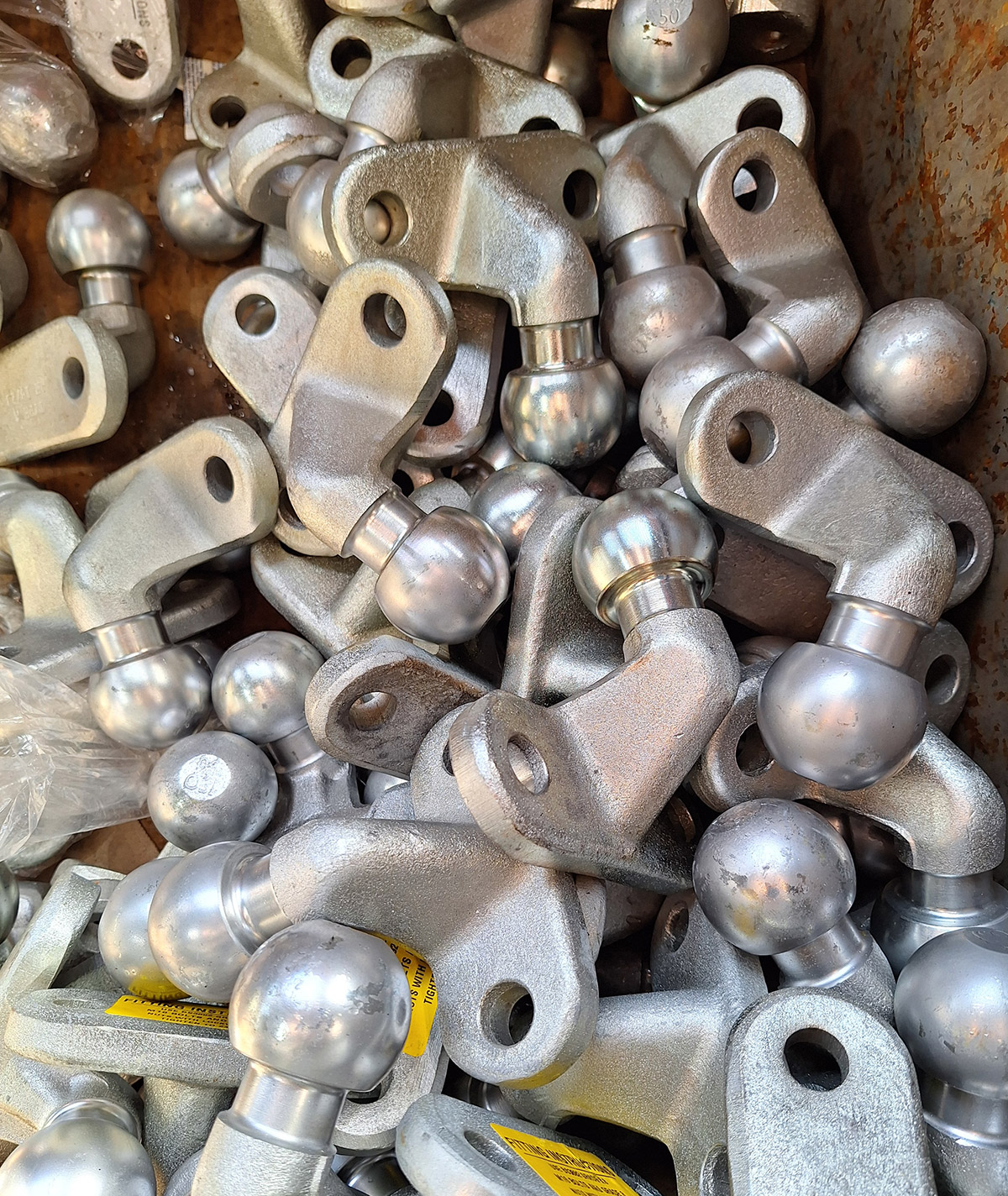
Trojan Manufacturing, Forging and Automotive has recently had an automotive bias with aftermarket tow-balls being one of the main products it has been manufacturing
“Forged parts are highly resistant to stress and fatigue because the forging process aligns the metal’s grain structure. Cast parts have a random grain flow, which can leave them vulnerable to microscopic voids or cracks under heavy loads.”
“Casting is ideal for highly complex, intricate shapes (or parts with internal cavities). Forging is better for simpler, robust shapes but typically requires more machining to achieve final tolerances. Casting is usually much cheaper and faster for mass production.”
Trojan Manufacturing, Forging and Automotive
“We acquired Trojan Manufacturing, Forging and Automotive in December 2025. The company has historical links with African Hoe and AH Forgings.”
“The previous owners had been struggling to turn the business around. The shareholders just didn’t have the backing and competitive edge that PTD has due to this forging business being a complimentary breakaway from our group.”
“Besides wanting to diversify, the strategy behind acquiring Trojan Manufacturing, Forging and Automotive was also to secure a supply of our forging requirements in the bracket up to 25kgs.”
“We were also very aware of clients wanting to deal with one supplier – from raw material to final machined component. This is not a new trend but it makes sense in this climate where dealing with various suppliers for one component type adds costs.”
“With our machining capabilities we are now very attractive as a one-stop shop offer. We also now have the opportunity to get involved in converting clients to using forgings more often for the advantages that they offer.”
“At PTD we have also advanced our design and development department to include reverse engineering. This is a critical factor in the synergy between the two companies but also to counteract the threat of the flood of Chinese products in South Africa.”
“We have also spent over R7 million on our quality inspection department and have recently added a
Magnaflux stationary magnetic particle inspection bench, crack detection equipment and ultrasonic testing equipment.”
“Trojan Manufacturing, Forging and Automotive is a relatively small forging company (24 staff) that has recently had an automotive bias. Aftermarket tow-balls have been one of the main products it has been manufacturing. Solid forged hand tools and products such as pinch bars, marlin spikes and solid handrailing are others it has been manufacturing.”
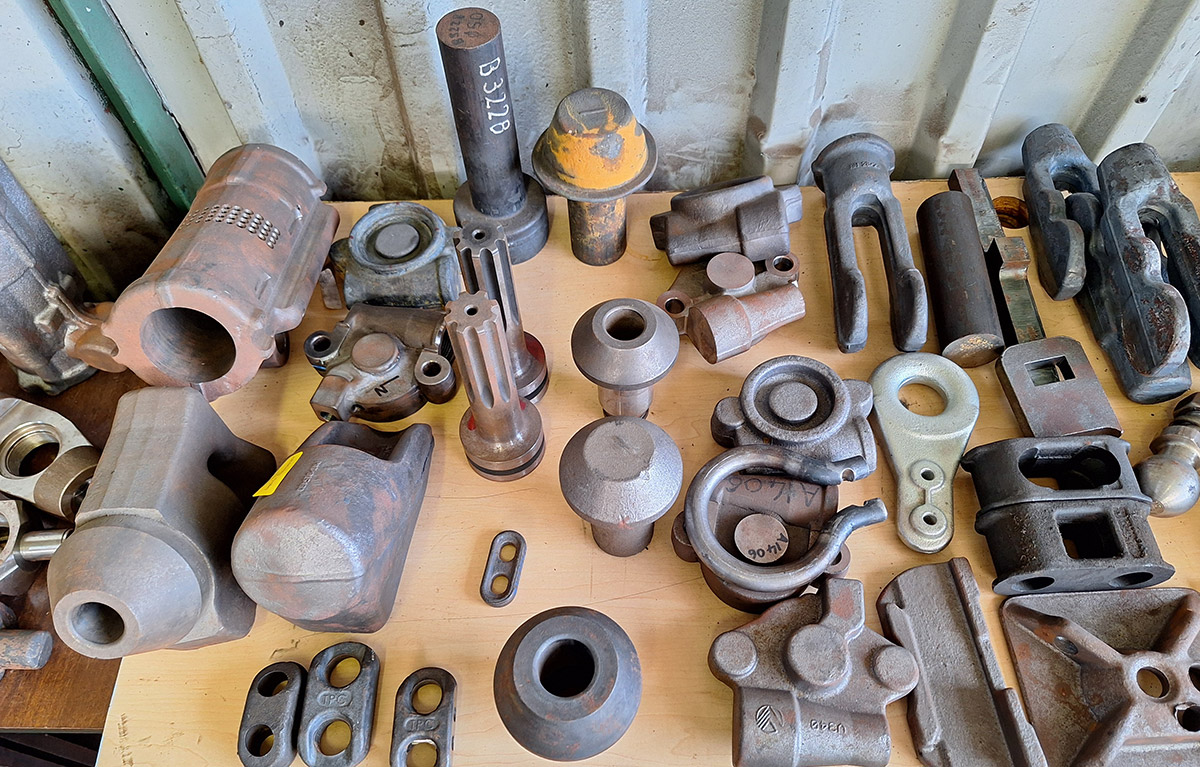
The existing industries that Trojan Manufacturing, Forging and Automotive supplies into include mining, locomotive, automotive, construction and general engineering. Oil and gas, aerospace and renewable energy are potential industries that the company will target in future
“The existing industries that it supplies into include mining, locomotive, automotive, construction and general engineering. Oil and gas, aerospace and renewable energy are potential industries we can target.”
“Forging is best for components requiring maximum strength under extreme stress, such as engine pistons, automotive suspension parts, heavy-duty truck wheels, and premium golf club irons.”
“Trojan Manufacturing, Forging and Automotive is equipped with 8 mechanical H-frame presses that includes a 1 000 ton, two 600 ton, one 350 ton, one 300 ton closed die press and three 200 ton clipping/trimming/punching presses. The weight range of a component is 0.5kg up to 10kg.”
“Friction screw presses comprise a 900 and a 600 ton closed die press capable of forging components from 5 to 25kg and we have two header/upset horizontal press lines capable of handling parts ranging from 300mm up to 1 500mm (50mmOD).”
“Besides machining we also offer heat treatment, quality inspection, material cutting, hardness testing and shotblasting.”
“We are going to continue manufacturing the tow-balls because it has a niche position in the local market and is SABS approved. With heavy competition coming from China there are not many of those OEM manufacturers in South Africa anymore. Moreover, we are concentrating on the aftermarket segment.”
“Our business PTD has undergone a significant transformation recently, as has Trojan Manufacturing, Forging and Automotive and we do not want to rely on one industry, hence our diversification.”
For further details contact Trojan Manufacturing, Forging and Automotive on TEL: 010 500 1087 or visit www.tmfa.co.za
