Have you ever thought about the complexities that make up your spice grinder and its perfect distribution of whatever condiment you decide to enhance the flavours of your meal with? Neil Allies, a toolmaker by trade and Chief Technical Officer / Designer at Flexo Line Products has. In fact, Allies and his colleagues have spent countless hours perfecting the designs behind the gears that form part of the makeup of your spice closure so that you can experience the perfect grind, every time.
Flexo Line, a specialist plastic injection moulding business based in Atlantis in the Western Cape, operates a plastics manufacturing facility built around injection moulding, supported by in-house tooling and increasing levels of automation. The company has developed its plant to manage both high-volume production and product development within a single site operating approximately 80 injection moulding machines.
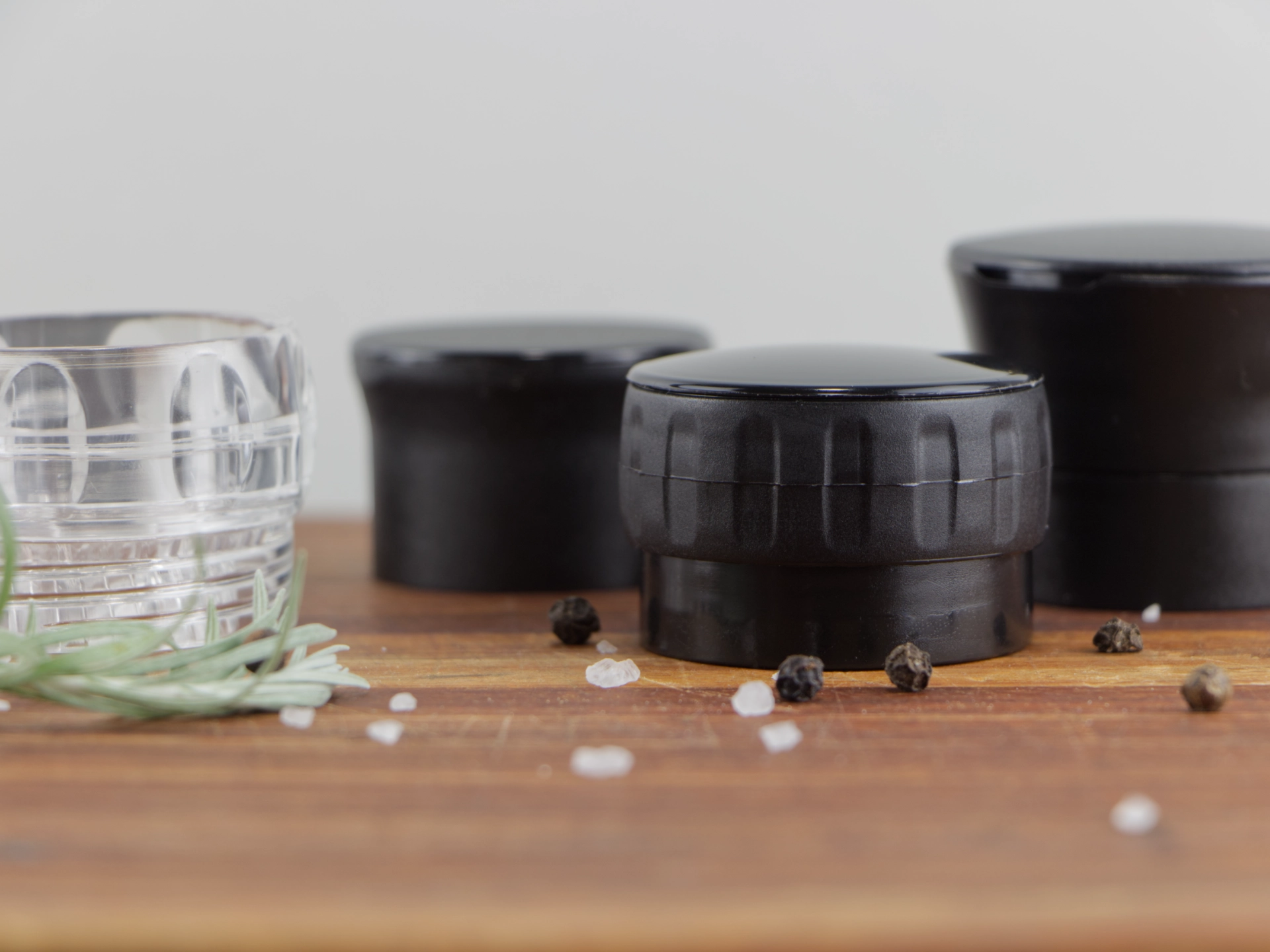
Image courtesy of Flexo Line
These form the core production capabilities of Flexo Line’s operations, manufacturing components ranging from small spice closures to larger household and industrial products. The machine mix covers a range of clamping forces, allowing the company to process both high-cavity tooling for lightweight parts and larger moulds for bulkier items. Materials processed include common thermoplastics and materials such as PMMA, PC, PCTG, POM, ABS, PP & HDPE, as well as engineering polymers where required. All materials used by Flexo Line are FDA and EU approved.
Production is geared towards repeatability and throughput with high-volume items such as spice closures being produced on multi-cavity moulds, where cycle time and consistency are key factors. The plant configuration has a focus on continuous operation, with machines set up for extended production runs.
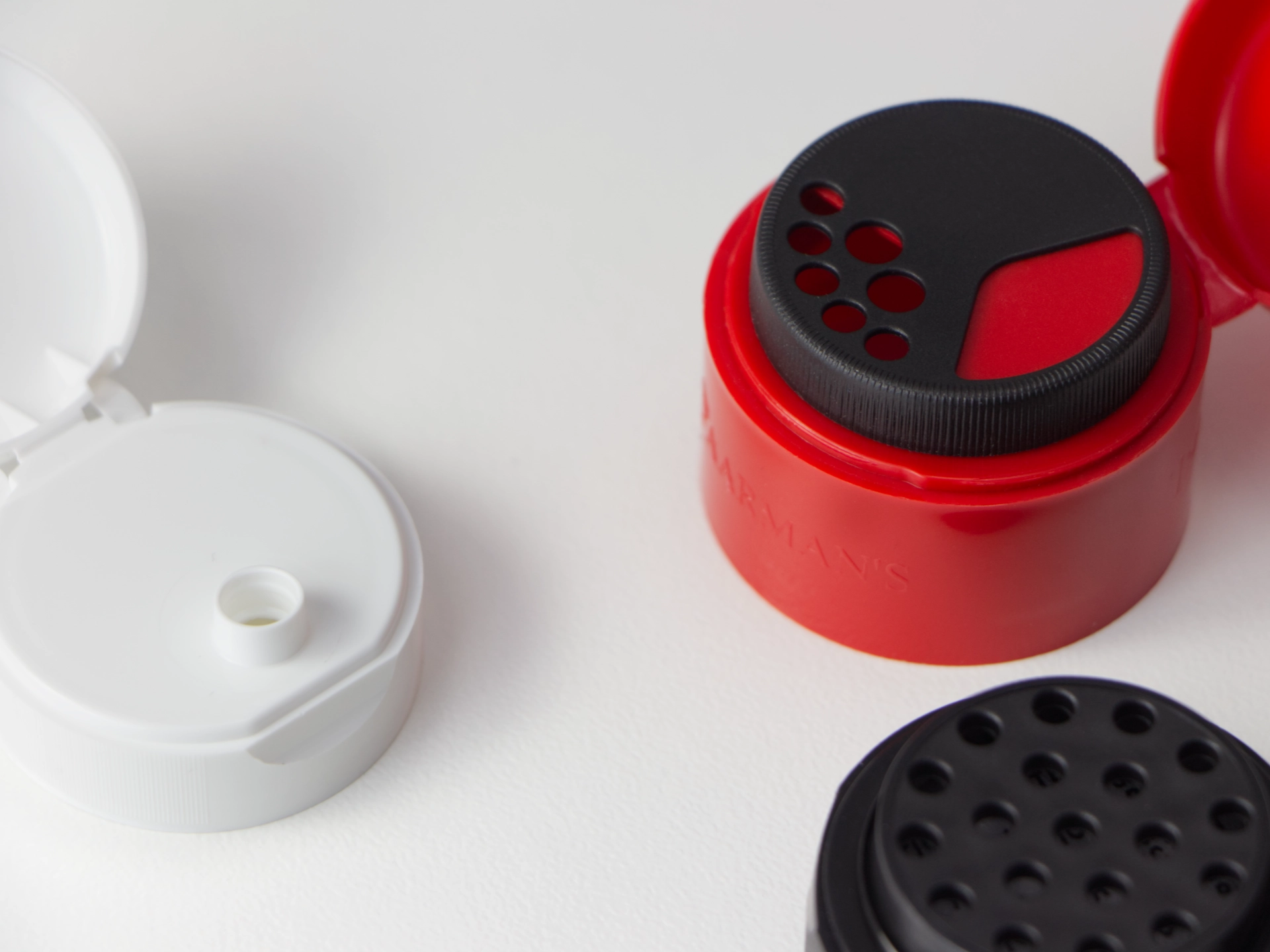
Image courtesy of Flexo Line
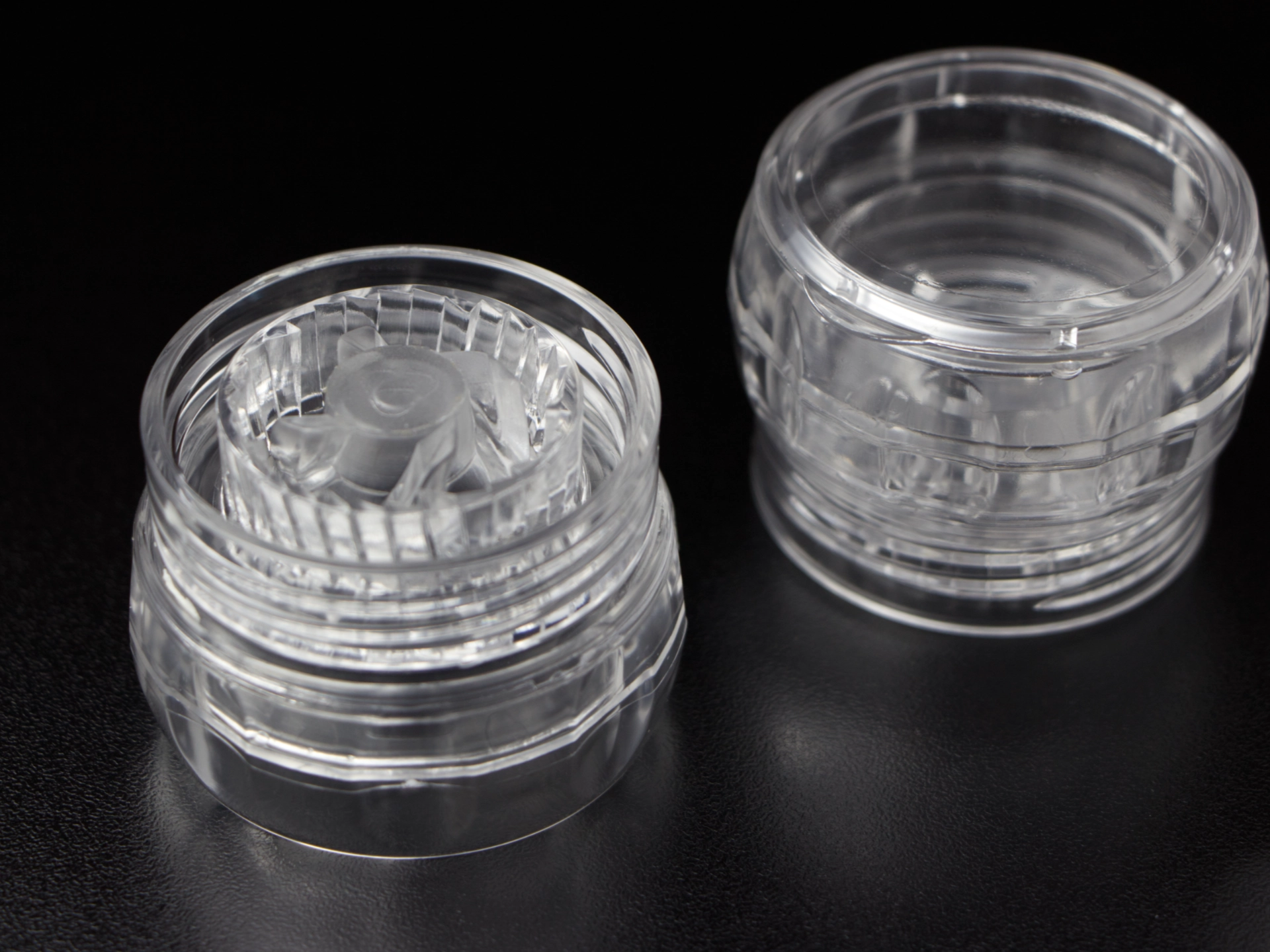
Image courtesy of Flexo Line
Automation has been introduced to the shop floor too supporting these requirements. In-house developed robotic systems are used for part removal, reducing cycle times and limiting manual handling. Conveyors and downstream handling equipment move components through to packing or secondary processes. In applications where products consist of multiple parts, automated or semi-automated assembly is used along with manual assembly.
Material handling is also centralised. Resin is supplied to machines via vacuum loading systems, with drying and blending equipment ensuring consistent input conditions. This is particularly relevant when processing materials sensitive to moisture content or when colour and additive consistency must be maintained.
In-house toolroom
Fundamental to Flexo Line’s continuous operations is an in-house toolroom. This facility includes CNC machining centers, EDM equipment and conventional machines used in the manufacture and maintenance of injection moulds and tooling. By retaining tooling capability internally, the company can manage lead times more closely and carry out modifications or repairs without relying on external suppliers.

Flexo Line, a specialist plastic injection moulding business based in Atlantis in the Western Cape, operates a plastics manufacturing facility built around injection moulding, supported by in-house tooling and increasing levels of automation

Flexo Line is geared toward high-volume production and product development within a single site operating approximately 80 injection moulding machines
“Our toolroom is key to our business,” says Allies. “In the last few years, we have added a number of CNC machines, these include a mill-turn machine and two vertical milling machines – with 4th axis rotary tables. We manufacture and maintain moulds in-house, so having an efficient and experienced toolroom gives us the ability to do this.” Toolmaking supports both new product development and ongoing production, explains Allies. The ability to service these moulds and tools on site contributes to Flexo Line’s machine uptime and the toolroom also enables design changes to be implemented with limited disruption to production schedules.
“A section of our toolroom focusses on R&D. There is a fair amount of R&D needed to deliver the required output per revolution of whatever that might be from pepper to mixed spices. Our customers’ requirements might vary from, course, medium to fine. There are adjustable grinders that allow for both fine and a course grind or the perfect mix in between. Various gears are designed to meet customer requirements. Recycling has also come into play in recent years, so choice of material and design considerations must allow for this requirement.”

Flexo Line has developed robotic systems used for part removal, reducing cycle times and limiting manual handling

Automation has been introduced to the shop floor with the introduction of cobots and other robotic systems
“Unfortunately we started looking outside of South Africa to manufacture certain moulds due to toolroom capacity and skills shortage. We are trying to avoid this where we can, however we will continue to upskill our toolroom’s capabilities.”
Products are designed in-house and 3D printed, presented to customers for design approval before pilot tools are made, samples from pilot tools will under undergo vigorous testing to meet customer needs before manufacturing of production tooling.
Components from the production tooling will undergo strict quality control processes and the use of both manual and automated testing techniques are utilised before it goes to market.

Fundamental to Flexo Line’s continuous operations is an in-house toolroom. This facility includes CNC machining centers, EDM equipment and conventional machines used in the manufacture and maintenance of injection moulds and tooling
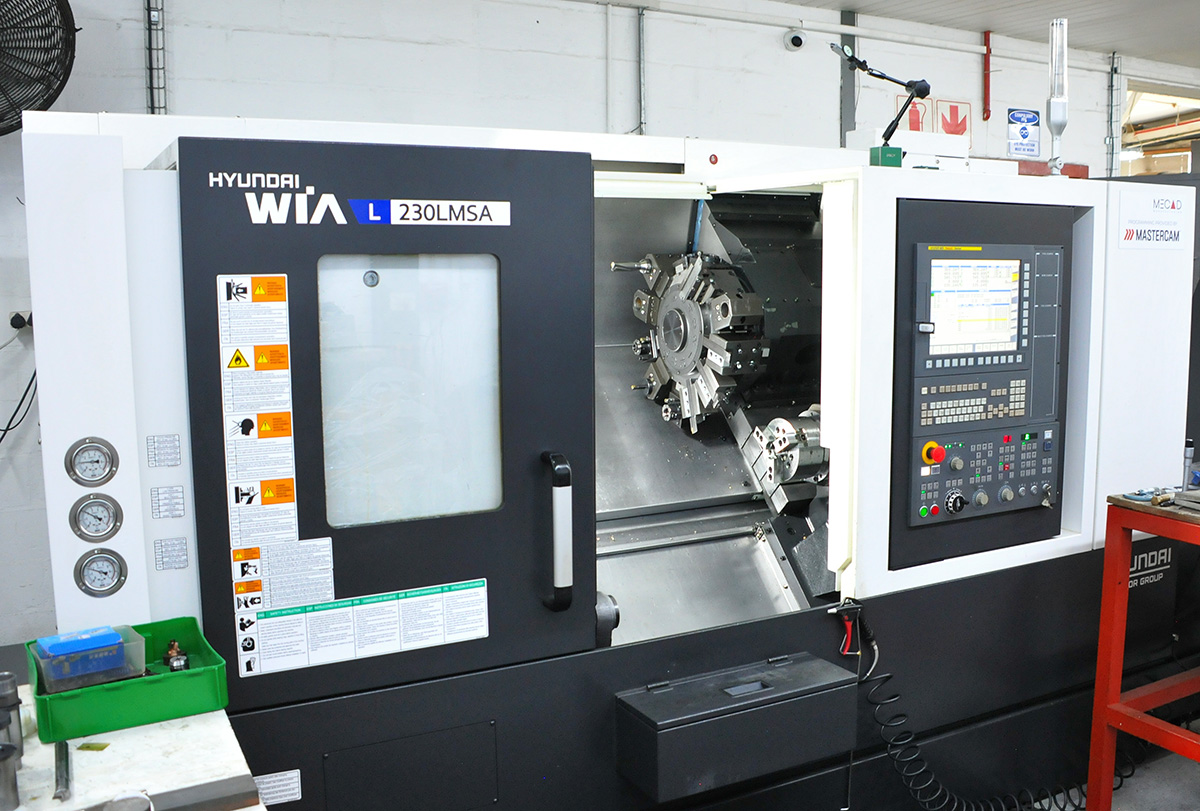
Flexo Line’s Hyundai WIA L-230LMSA is a high-performance, slant-bed CNC turning center
“Different shapes and different designs contribute to a different grind and feel,” says Allies. “We manufacture more than 200 different types of grinders and flip top lids and more than 40 different PET bottle shapes. Flexo Line manufactures more than 500 000 components in a day, of which a large portion is for export markets.
Upstream of production, the company incorporates design and prototyping functions as another core in-house aspect of the business using SolidWorks and Mastercam. These CAD/CAM systems are also used to develop components and tooling, with prototype parts produced for testing before full-scale manufacturing begins, allowing products to be refined prior to committing to production tooling.

Flexo Line’s Hyundai WIA KF5600 vertical milling machine with 4th axis rotary table

Flexo Line also make use of a Leadwell V-40 vertical machining center and a Maximart BMC-5A 5-axis vertical machining center
The overall structure of the plant reflects an integrated approach. Injection moulding, automation and toolmaking are combined, allowing Flexo Line to move from concept through to production without extensive outsourcing.
Other products manufactured by Flexo Line include buckets and storage products, furniture fittings, hair curlers, medical containers, wall plugs, educational toys, stationery and plumbing fittings.
For further information contact Flexo Line on TEL: +27 21 511 7578 or visit www.flexoline.co.za
