On June 18 and 19, AMT 3D, an additive manufacturing specialist service provider offering a variety of manufacturing machines and technologies for multiple applications and industries, held workshop experiences for clients and industry peers at its Firgrove, Somerset West factory.
The workshops gave attendees the opportunity to view live machine demonstrations that included metal powder and metal wire printing, as well as offered attendees the opportunity to listen to AMT 3D’s additive manufacturing experts delve into use-case specific additive manufacturing solutions for small and large component production.
Discussions also aimed to dispel myths surrounding the technologies such as that the parts produced are weak or porous, materials are limited and that the technology is purely for prototyping and too expensive to implement at scale.
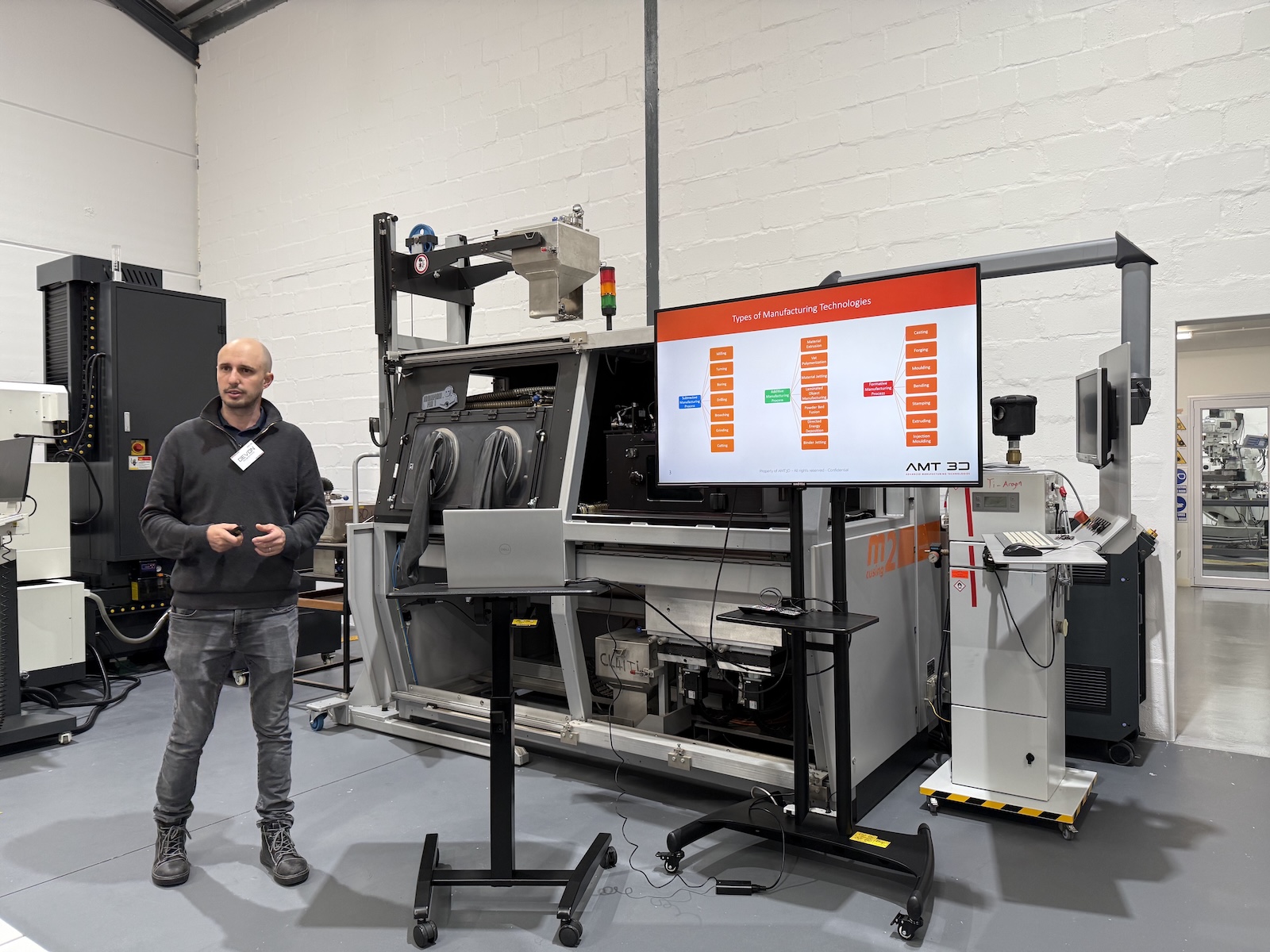
Dr Devon Hagedorn-Hansen, Managing Director of AMT 3D, led the workshop’s proceedings along with AMT 3D’s additive manufacturing experts as they delved into use-case specific additive manufacturing solutions for small and large component production
“You need to closely examine the process and technology used when deciding whether to adopt additive manufacturing on your shop floor or not. You need to ask yourself what additive manufacturing technique is the most suitable for your needs,” explained Dr Devon Hagedorn-Hansen, Managing Director of AMT 3D.
Hagedorn-Hansen holds a PhD in Industrial Engineering which he obtained from Stellenbosch University completing a thesis focussed on Laser Powder Bed Fusion of Tungsten Carbide Cobalt Cutting Tools, and has been involved in the additive manufacturing and 3D printing industry for over a decade.
The workshops were designed to approach a range of practical industry topics including advanced manufacturing in Africa: Challenges, opportunities and what’s next; the truth about additive manufacturing: Myths vs reality; design principles for advanced manufacturing and accelerating the innovation cycle.
Other topics included Design for Manufacturing (DfM) and why it extends beyond any single technology; automation principles and practical implementation in an ever-changing manufacturing environment; and what really matters when selecting an industrial additive manufacturing system.
Clear distinctions were explained between the different methods of additive manufacturing including Laser Powder Bed Fusion (LPBF) and Directed Energy Deposition (DED).

AMT 3D’s Meltio M450 is a compact, plug-and-play metal 3D printer that uses DED-wire technology. It fabricates fully dense, industrial-grade metal parts directly from standard welding wires. It’s compatible with a wide range of commercially available wires including stainless steels, mild steels, carbon steels, titanium alloys and nickel alloys
Both are metal additive manufacturing processes but function in vastly different ways and scales. LPBF is a highly precise, low-volume process that is best suited for complex geometries and DED uses a blown-powder or wire nozzle to build or repair large, tough components at much faster rates.
LPBF applies a layer of fine metal powder that is spread across a build platform. A laser selectively melts the powder to form the cross-section of the part. The platform then lowers, and the process is repeated layer by layer in a sealed, controlled chamber. It’s a much slower process than that of DED, but can often be the solution for much more complex and intricate components.
DED on the other hand uses material (powder or wire) that is continuously blown or fed through a nozzle directly into a laser’s focal point. The laser melts the material instantly, and it is deposited layer by layer in free space to build the component. The process is more suited to larger, less complex components and the time needed to manufacture a component is also reduced when compared to LPBF.
One of the key takeaways for additive manufacturing technologies though, and one where both LPBF and DED technology make sense, is that both processes result in the absolute minimum of material wastage when compared to traditional subtractive metalworking technologies such as milling or turning.
Supply chains have been placed under huge pressure in recent years and this is another area where additive manufacturing is coming into its own. For example, instead of waiting weeks or even months for wear components to arrive from a supplier, they could now be 3D printed. Another example is with the associated costs of sourcing materials to manufacture moulds and dies or tools traditionally. With additive manufacturing processes such as DED-wire technology, quicker, and often cheaper material solutions may be obtainable to manufacture these components.
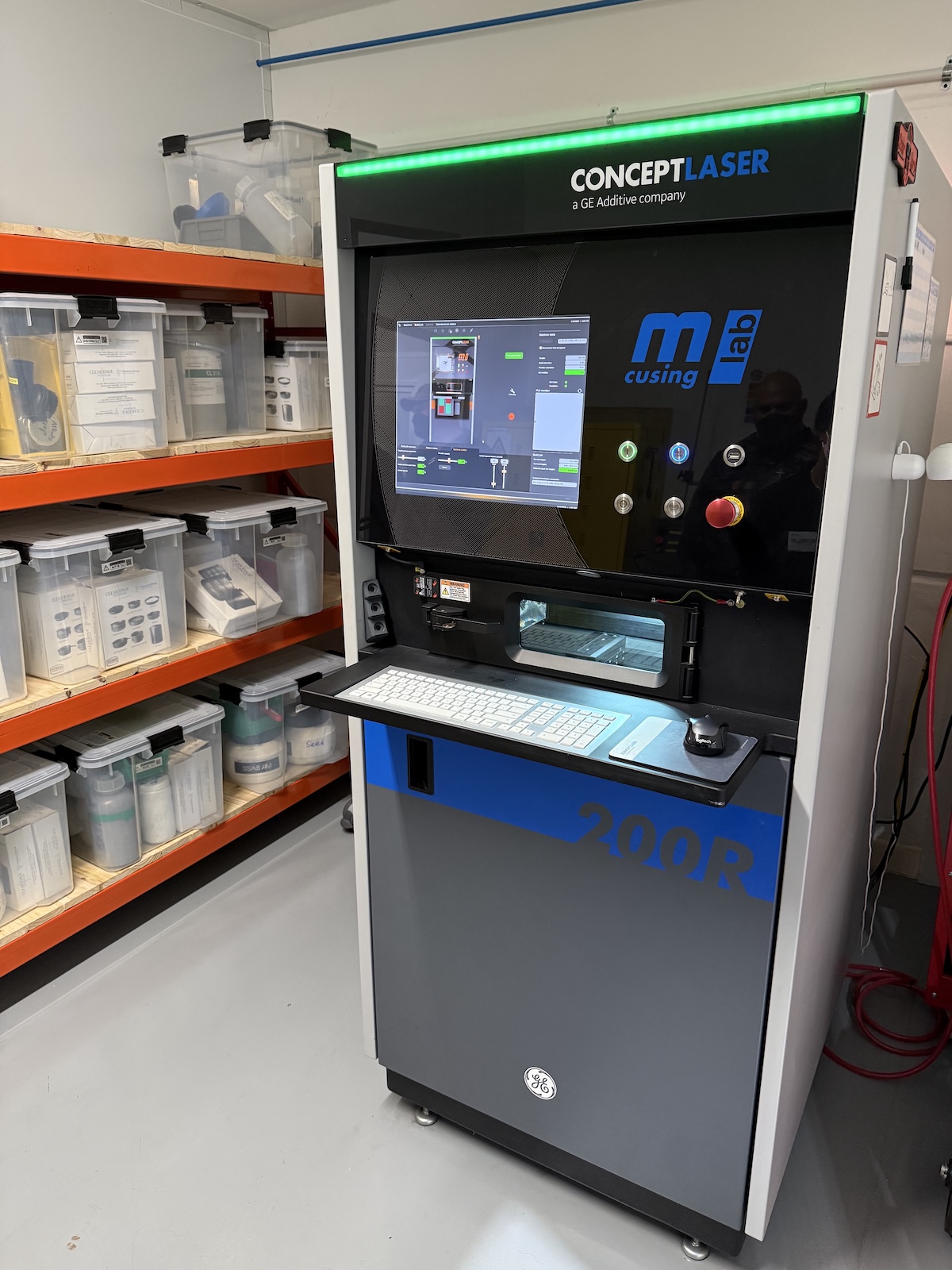
AMT 3D’s Concept Laser Mlab 200R is a compact LPBF metal 3D printer. It can produce intricate, high-precision parts in a range of materials like stainless steels, titanium and titanium alloys, aluminium and copper alloys, nickel and cobalt alloys as well as precious metals
The medical industry is fully embracing the technology, particularly in arrears such as custom titanium implant manufacturing that offer patient-specific solutions with high biocompatibility.
While the average machine shop is likely not going to be adopting a shop floor full of additive manufacturing machines any time soon, there are a few exceptions already out there such as the titanium Apple Watch Series 11 cases that are now being 3D printed with 100 per cent recycled aerospace-grade titanium powder.
The workshops were not about desktop hobby machines – which definitely have their place and are used by engineering companies on an ever-increasing basis for many reasons including rapid prototyping – but to dispose the myth of the technology being just that, something that you only have in your office on a desk for prototyping a mould or printing your child a toy.
They’re now real, matured technologies that have evolved to be used at industrial scales.
Attendees also had the opportunity to engage directly with AMT 3D’s team of metallurgists, aeronautical and industrial engineers.
“You almost need to be a metallurgist – you need to be good at the science of understanding materials to be able to best select what method will be best for manufacturing your component. We are constantly researching and testing material properties,” says Hagedorn-Hansen. “This is not about replacing conventional manufacturing. It is about understanding where advanced manufacturing creates value and using it strategically.”
From aerospace and tooling to repair and advanced engineering and manufacturing applications, the workshops were designed to help designers and businesses understand where additive manufacturing delivers measurable value in modern production environments.
“We are comfortable saying no when a solution isn’t right. Not to slow progress, but to protect it. Because every misaligned implementation doesn’t just affect a single project, it impacts confidence in additive manufacturing as a whole.”
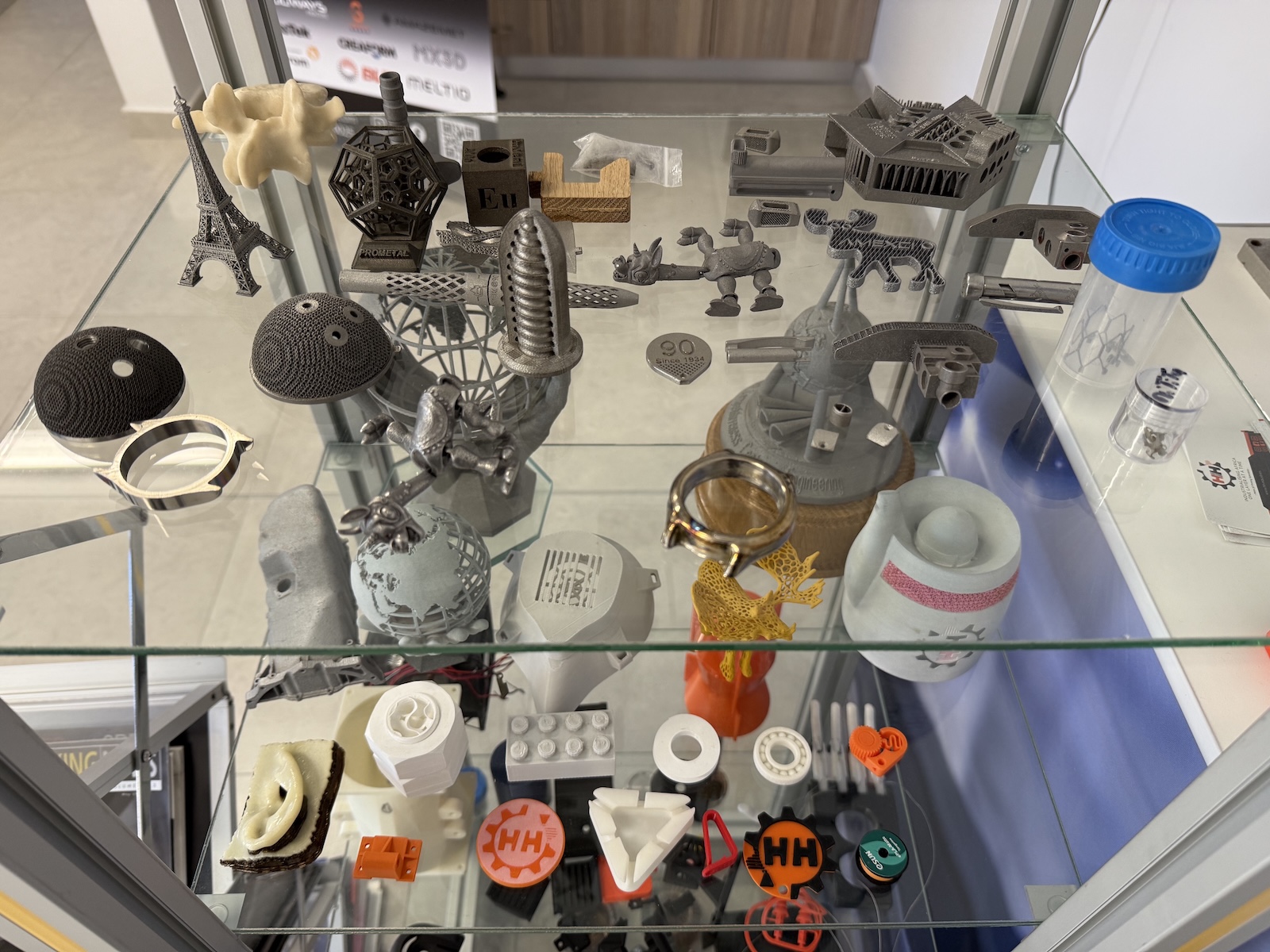
Various components additively manufactured by AMT 3D
“Integrity remains a core value we stand by at AMT 3D. It shapes how we assess technologies, how we engage with our clients, and how we approach every recommendation. We believe that long-term success in advanced manufacturing depends on decisions grounded in reality, not urgency.”
“Our role goes beyond supplying equipment. We support the development of fully functional additive manufacturing facilities, ensuring that what is implemented works, not just in theory, but in practice, over time,” concluded Hagedorn-Hansen.
AMT 3D have commissioned fully functional manufacturing facilities across the African continent from modern industrial plants to custom designed solutions engineered for remote and infrastructure-limited environments.
The company serves a broad range of industries including aerospace, automotive, oil and gas, mining, academia and research, general engineering, medical and defence, and work with both additive and subtractive machining technologies, both metal and polymer based. AMT 3D represent leading advanced manufacturing brands such as AMAZEMET, Bright Laser Technologies (BLT), Meltio, SWICE, Ready Metrology, and MX3D in South Africa.
For more information contact AMT 3D on TEL: +27 67 597 0025 or visit https://amt3d.com

