Sometimes understanding where your efficiencies in your production processes lie is better than trying to do it all yourself.
Cape Town-based Alu-Cab is widely considered an industry leader in the adventure canopy market, known for their expansive, high-quality range of aluminium overlanding canopies and vehicle accessories. For 25 years, the company has followed the philosophy of ‘make it better’, building a cult following all over the world.
The story began with founder Jeremy Bergh, a plumber by trade, realising a gap in the market and a need for himself personally. Bergh was unable to find a vehicle canopy that suited his requirements. He matched that need for both work and recreational adventure purposes.
“Alu-Cab was a dream, a challenge and a pleasure. It’s been the greatest gift too. This is something that I was passionate about since I was a boy. I have always made things and some of those things grew into what we have today,” says Bergh.
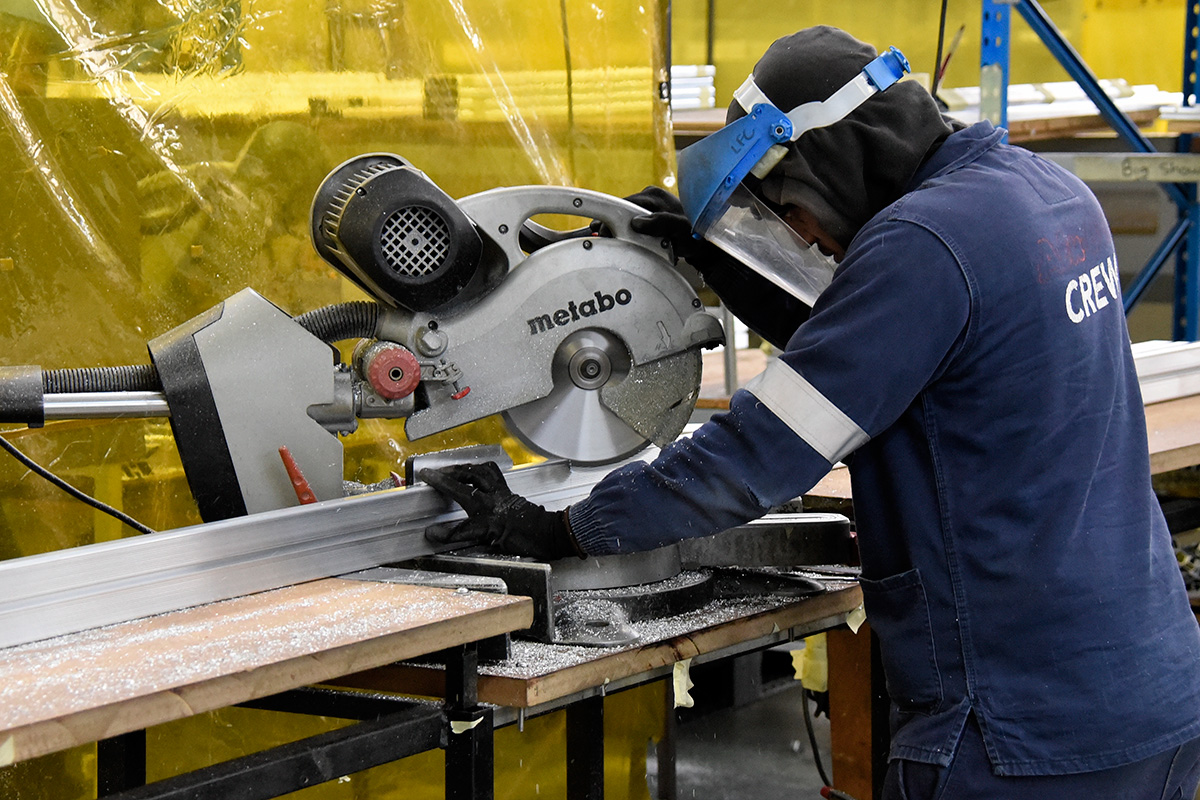
Alu-Cab does all its own in-house cutting to length of aluminium extrusions that are supplied by a local mill
“I started Alu-Cab as a practical option on the back of a vehicle. Something that I could work and play from and would get me into the wilderness. Nature is the most special place. Because when you connect with the earth it’s good for the soul. To build a business around that is a pleasure. When I see somebody use our products to connect with nature it’s really rewarding. Knowing that we’ve opened a door for people to experience that same sort of adventure that I went through in the early days of Alu-Cab,” reflects Bergh.
“It’s also been difficult building this business. There was a massive amount of pressure. I was doing the marketing, design, running workshops and trying to sell. And we fought and struggled and designed and built and we started to make a mark. And then we broke into international space. This was never supposed to be part of the story, but it became a huge party of our story and that’s come with its own challenges.”

Alu-Cab have a custom-made Unicam CNC router T-slot machining center that takes care of most of their high-precision slot milling that they need to do on their extrusions
“The pressure was unbelievable. We’d be preparing for a show and would be building up to that three, four nights in a row, pumping out late hours, doing what we had to do until everything was ready and we’d jump into our cars and drive off to Joburg, arrive at the show, perform at the show, turn around, come home, and start building if we’d sold anything… Because often in those early days we didn’t often sell anything.”
“And we’d have the bank manager coming to us and saying, ‘Look, we’re reducing your overdraft facility because we don’t see any hope for you guys.’ And I remember telling my bank manager, ‘Won’t you do me a favour and grab the electric fence on the way out?’ The pressure was unbelievable. I was in so deep. I put everything that I owned on the line.”
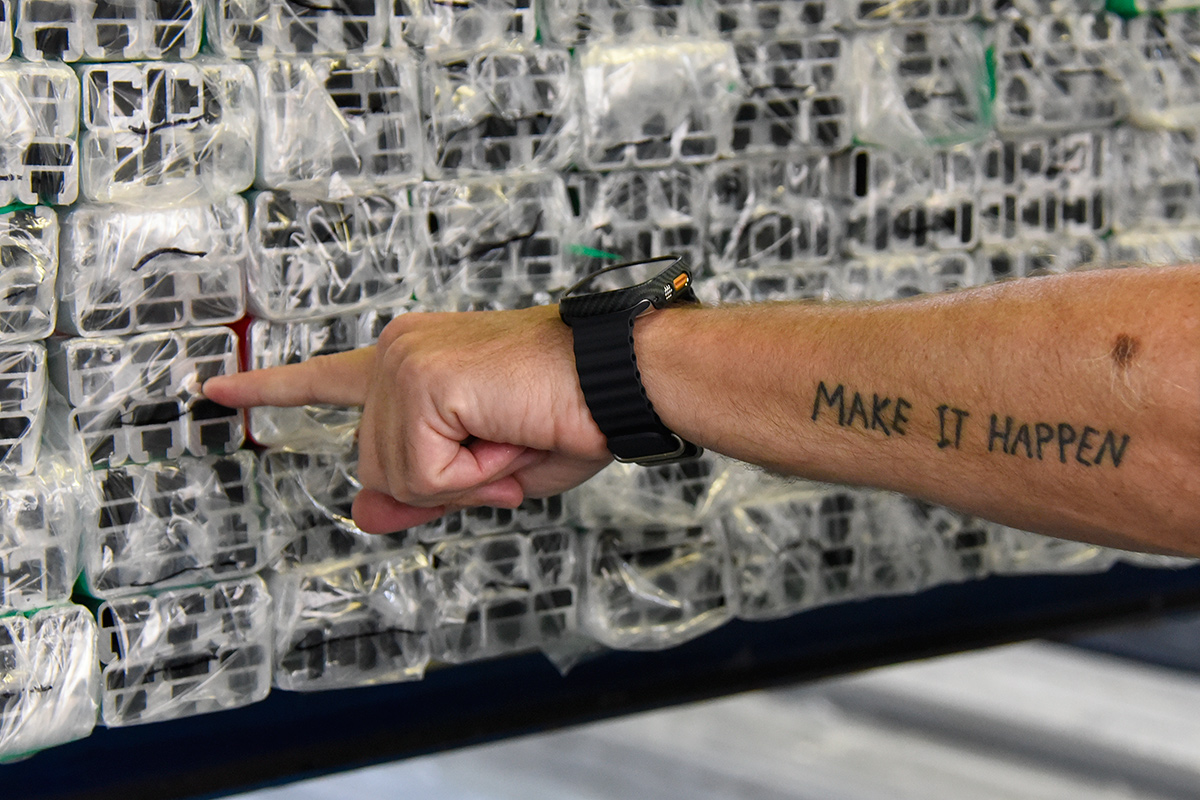
About 99% of Alu-Cab’s products are made up of aluminium
“I had a home and a family, and I had to keep soldiering on, because I had this dream. And I knew that we were doing something right. And that if we just kept fighting, we’d start to see the fruits of our hard work. And our accountants were telling us that it’s time to get out and I said no. Because I knew we were nearly there.”
“We just had to keep fighting. Even though most weeks ended with me folded over in my chair in tears because the stress was getting to me and I just didn’t know how to control it. I’d go to bed broken, wake up at three o’clock wide awake, make notes, send messages to my staff, and was fighting everyone and everything until eventually I went into my office with a migraine coming on, lay down and woke up five days later.”
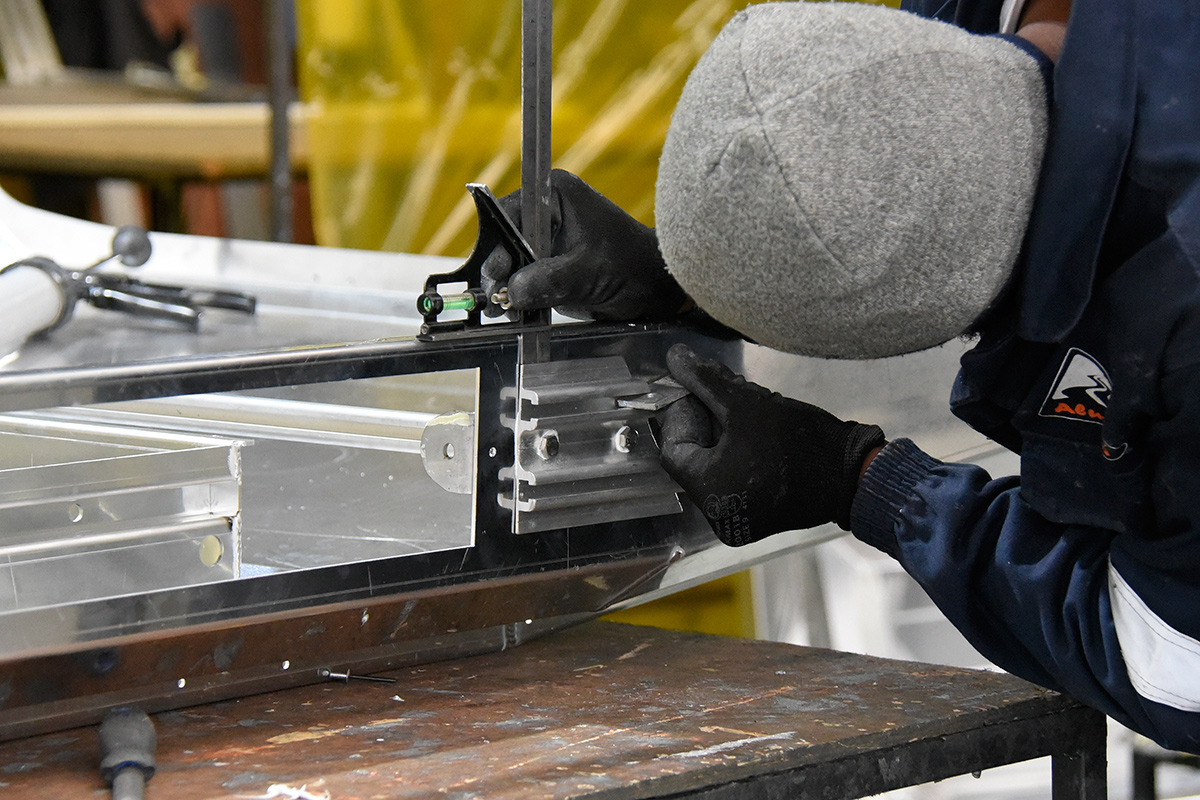
Alu-Cab products are hand-made and proudly South African
“It turned out I had a brain tumour. Fortunately, as stupid as I am, I thought this was just another one of the battles that I had to fight my way through. I was also fortunate to have a wife that supported me and a partner like Warwick Leslie who was there to pick me up when I fell over. And he’s still holding me up.”
“I kept on fighting. The tumour in my brain as well as anything that came between me and my dream of building this business. And I won. Alu-Cab has been an incredible lesson. Nothing’s been gifted to us. We made this work. We made this happen. What we’ve built in this little town at the bottom of Africa is so special because, yes, it’s come from a lot of hard work, a lot of fighting and a lot of stress, but it all started with a dream.”
Knowing your business, and knowing how to grow it in Bergh’s case, meant living the product for Bergh and his team in those early days. Many adventures, trials and errors led to innovative designs and this was real R&D straight from the workshop to the field. It’s likely that Alu-Cab can be credited with bringing to market the first commercially available canopy kitchen setup.
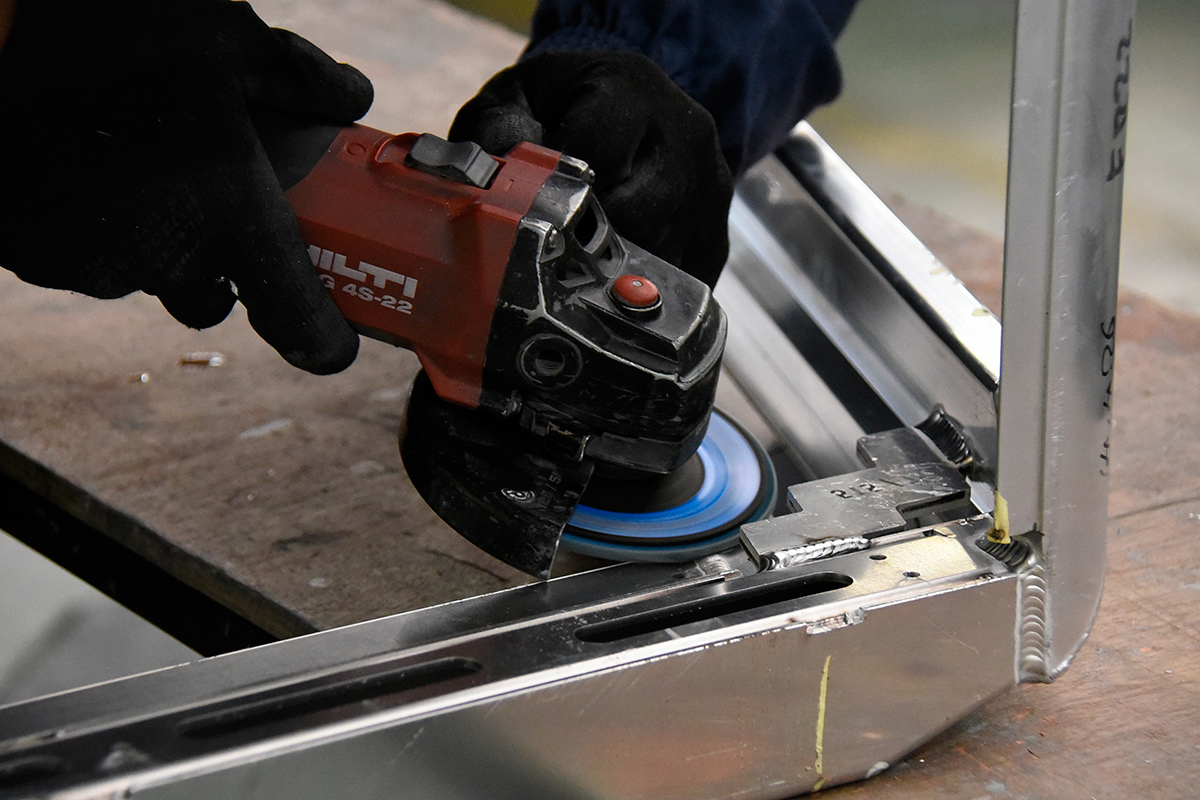
Alu-Cab employs approximately 600 people across its three factories, many of whom are skilled artisans
Bergh worked out of his double garage at home, using a single garage next to it as his office. Today Alu-Cab runs its manufacturing and assembly operations from three facilities with a total of 24 000m2 under roof.
“You could say that approximately 97% of our products are put together by hand,” says Christopher Morgan, Alu-Cab’s CIOO. “Over the years we have had discussions about bringing our sheet metal processing in-house but for the volumes we process, now around 53 tons a month of sheet metal alone, we have made the decision to stay with our suppliers that have been very good to us over the years. We’ve experienced innovations too in terms of how our sheet metal is processed and roller forming now makes up a substantial ratio of how our sheet metal products are manufactured, especially for our canopies and rooftop tents.”

“We have stuck to MIG and TIG welding because it gives us the strength and aesthetics these welds provide that we are looking for with our products. Laser welding may look pretty, but if it’s not structurally there, we are not going to take the risk of a customer who is driving down from Europe into Africa having a product fail in the middle of nowhere.”
“Not only has this innovative technique in sheet metal forming brought about visually appealing changes to our products but it has also brought about weight savings and we have been able to reduce material thicknesses as a result,” explains Morgan. “The industry has also moved away from what was the traditional chequer plate or tread plate look. About 99% of our product is made up of aluminium, it’s only really your brackets and some other components that are manufactured out of stainless steel.”
“We do all our own in-house cutting to length of our aluminium extrusions that are supplied to us from a local mill,” explains Andre Crafford, Alu-Cab’s Production Manager.
“We have also had a custom-made Unicam CNC router T-slot machining center supplied to us that takes care of most of our high-precision slot milling that we need to do on our extrusions. We have standardised on the M8 bolt here and that makes everything modular in terms of adding accessories to the slots. You only need a 13mm spanner for the hex head making everything simpler for our customers. This approach has meant that our products and accessories modular and compatible with fitment to other brands on the market,” continued Crafford.

Material and production flow are key to Alu-Cab’s operations
“We do have a laser welder, but we have found that for our needs, and the complexities of our products, that the technology is just not there yet. We have stuck to MIG and TIG welding because it gives us the strength and aesthetics these welds provide that we are looking for with our products. Again, this welding is all done by hand by our experienced artisans. The integrity of these welds is extremely important if you consider where our products are intended to go such us the tough roads of Namibia and elsewhere in Africa and the world.”
“Laser welding may look pretty, but if it’s not structurally there, we are not going to take the risk of a customer who is driving down from Europe into Africa having a product fail in the middle of nowhere. Another challenge we looked at when it came to deciding whether to introduce robotic welding and semi-automated lines or not was the vast number of different components that we manufacture and assemble. We are also constantly innovating, designing and redesigning products and the sheer number of jigs that we would need to manufacture or have manufactured just for welding didn’t add up. It would also take the personality out of the products that we manufacture – hand-made and proudly South African,” says Crafford.

“We have an engineering team of 18 people now and we also have an R&D department of five people. This is broken up into designers, engineers and draughtsmen. On the CAD side of the business, we use SolidWorks.”
“Alu-Cab now has roughly 1 800 Stock Keeping Units (SKUs) on our books, of which 1 200 are products and accessories with the balance being made up of spare parts. Changing our welding processes would also mean taking jobs away from some of the 600 people that we employ. You also need to consider the amount of mouths that these jobs feed both upstream and downstream so is that worth substantially changing our production methods for?” asks Morgan.
On tariffs and the effects that they have so far had on Alu-Cab’s presence in the US, Morgan says candidly: “It’s been difficult for anyone to really know what has to be paid. We have seen cautiousness from both distributors and customers in that market and that is twofold in that distributors don’t really know the real costs of importing product and what their margins might be, and customers being cautious in that, because our products are luxury items, do they really need that product right now or are they better off waiting to see if they’ll need that money for food, electricity or fuel costs?”
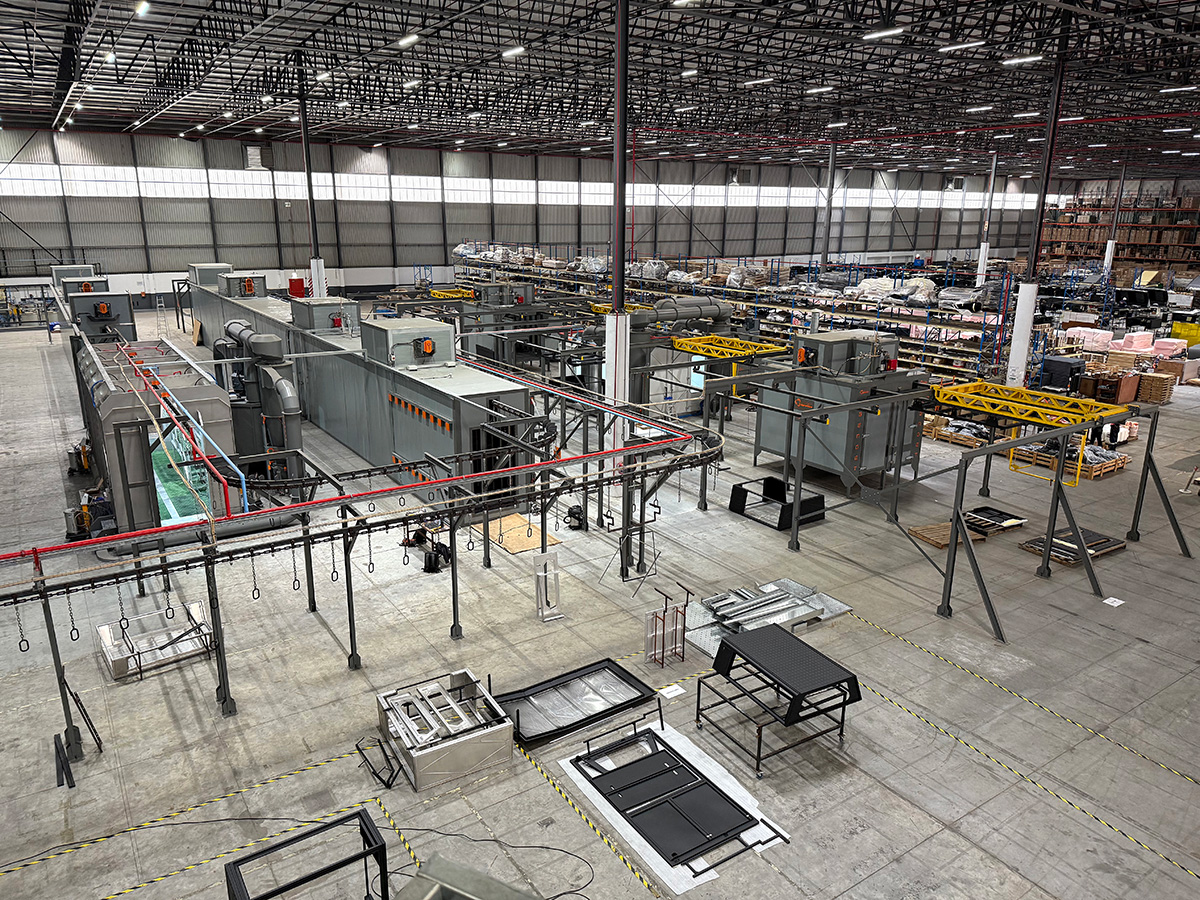
“The next big thing for us has been the design and commissioning of our new powder coating plant. It has been custom-made and installed by Bendet Engineering Services. It features both an automated facility as well as a manual facility where we can run different kinds of batch runs. Previously with our powder coating facility – we’ve long done powder coating in-house – we had to run two shifts. That will now consolidate into one shift.”
“We have adjusted production schedules accordingly but it’s also a bit of a yin and yang situation in that we are also seeing, as we did in Covid, while there may not be the money for that overseas holiday, there is the interest in exploring your own country, overlanding or camping. We are also not going to compromise on the quality of our products.”
“With having to adapt to challenges like Covid and now tariffs, for us it’s been about gaining efficiencies in our factories wherever we can. We have a huge product range – some products like the canopy campers will see us manufacture 200 a week of, and other products 200 a day of. Placing larger stock orders with suppliers, streamlining how manufacturing operations flow through the factories and overall, generally consolidating our operations and some of our shifts have been where we have realised not just cost savings, but time savings too. Over the last two years we have also moved from 15 factories into the current three that we have now, and with that we have become a lot more organised,” explains Morgan.

Approximately 90% of Alu-Cab’s products are exported to more than 70 countries around the world
“The next big thing for us has been the design and commissioning of our new powder coating plant. It has been custom-made and installed by Bendet Engineering Services. It features both an automated facility as well as a manual facility where we can run different kinds of batch runs. Previously with our powder coating facility – we’ve long done powder coating in-house – we had to run two shifts. That will now consolidate into one shift,” explains Warwick Leslie, Alu-Cab’s CEO.
“Overall, the new facility takes up 3 300m2 of factory floor – this includes the prep areas, continuous line, batch plant and effluent plant. This plant will give us a good understanding of what the flow through the whole operation will look like.”
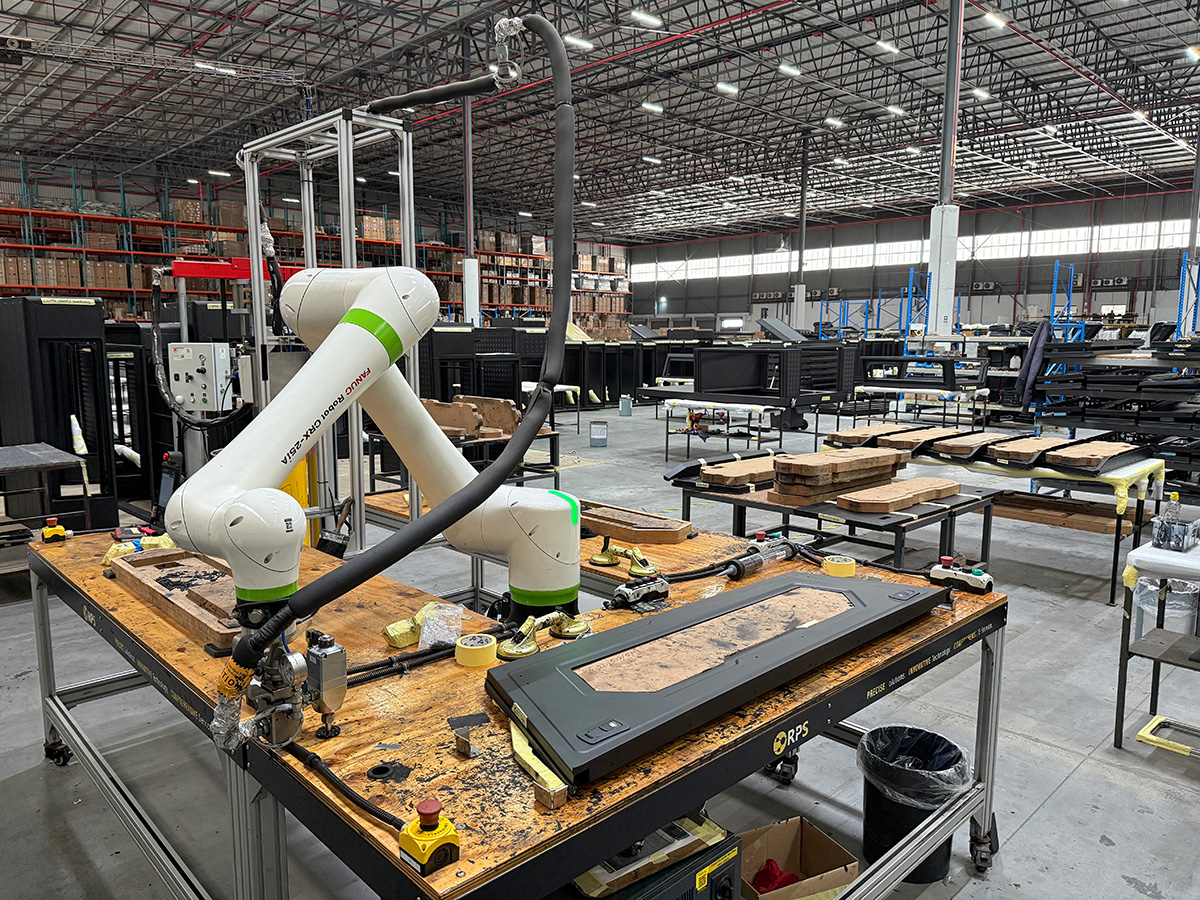
A FANUC CRX-25iA robot dispenses bonding agent onto an aluminium panel before a press operation seats the window. The result: Repeatable adhesive placement and consistent joint quality
“Because of the nature of our products and their unique designs that include slots, spaces and angles, we are still going to have a manual aspect to the powder coating process.”
“We have an engineering team of 18 people now and we also have an R&D department of five people. This is broken up into designers, engineers and draughtsmen. On the CAD side of the business, we use SolidWorks.”
“All of our canvas is manufactured by a sister company of ours here in Cape Town called AC Gear. There are approximately 60 machinists employed at that factory and we use a CNC cutting machine for pre-cutting all of our various patterns and designs for our canvas before the machinists take over.”

“We’ve experienced innovations in terms of how our sheet metal is processed and roller forming now makes up a substantial ratio of how our sheet metal products are manufactured, especially for our canopies and rooftop tents. Not only has this innovative technique in sheet metal forming brought about visually appealing changes to our products but it has also brought about weight savings and we have been able to reduce material thicknesses as a result.” Image courtesy of Craig Kolesky
Approximately 90% of Alu-Cab’s products are exported to more than 70 countries around the world with the remaining 10% consumed by the South African market. Alu-Cab recently took back control of its local distribution market and has already seen an upswing in market growth from being able to deal more directly and interact with its customers.
Apart from beautifully powder coated final products, Alu-Cab’s processes of taking raw material to finished products include cutting to length, grinding, welding, material preparation and cleaning, sealing, rigorous quality control checks and testing. All of Alu-Cab’s rooftop tents undergo waterproof testing in a dedicated facility where water is reused for this testing process via a purpose-built in-house water recycling plant.
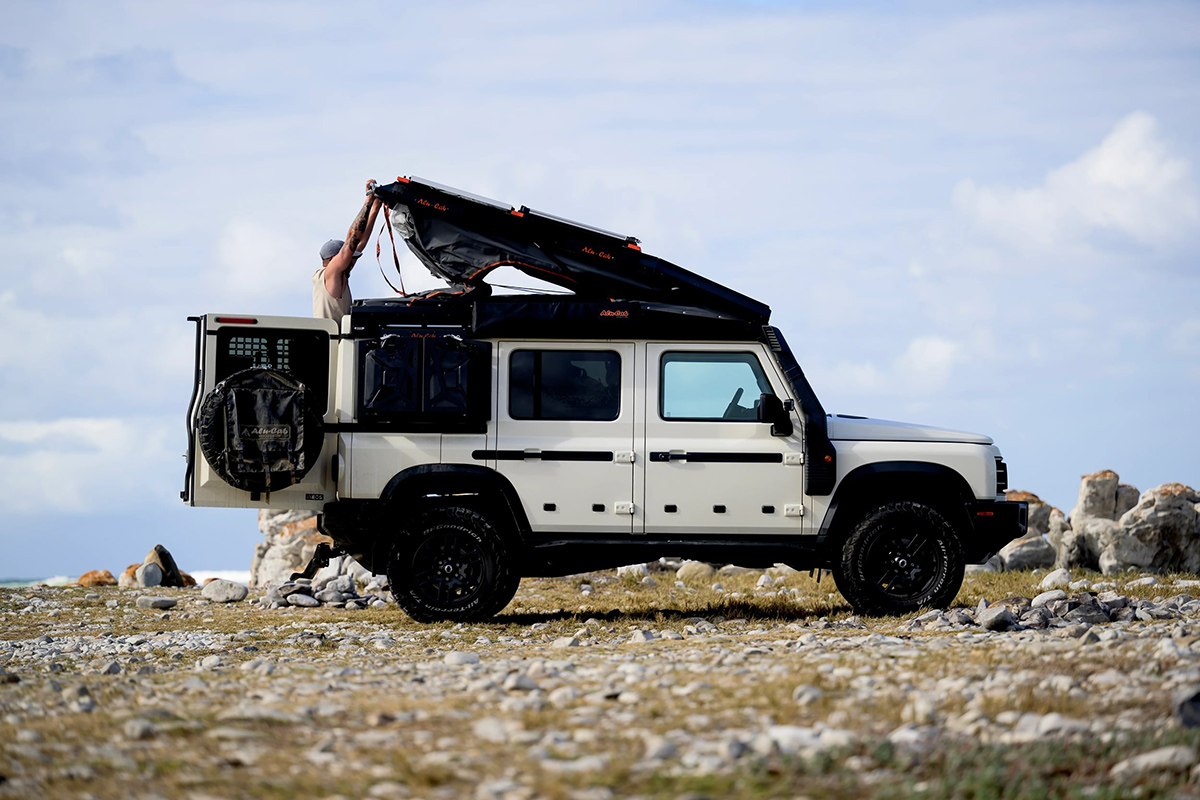
A roof conversion for the new Ineos Grenadier. Image courtesy of Craig Kolesky
For a number of years, Alu-Cab have used Hilti’s power tools. Together with Hilti, Alu-Cab have developed an in-house ERP tracking system for monitoring power tool use. This system allows Alu-Cab to know where a tool is in its factories, as well as which employee had access to that tool for the day. An added feature to this software system in its final development and trial stages will be the accurate measurement of a specific power tool’s use for that day, directly measuring that tool and an employee’s daily productivity.
Brand Manager, Dylan Muhlenburg, returns to Alu-Cab’s philosophy of continuous improvement, “We always say, let’s look at what already exists and how we can make it better. Take for example the Alu-Cab Tow Bar Step. It’s a heavy-duty, self-retracting step for vehicles with a standard 50mm tow hitch and is designed for easy camper or tent access without permanent modification as it simply bolts onto a standard 50mm tow hitch. Now you don’t need to carry a separate step.”

Alu-Cab’s products have been described as the Swiss Army Knife of overlanding equipment. The company manufactures aluminium overlanding systems centred on bakkie/pickup-based travel. The range includes load bin canopies, canopy campers, rooftop tents and roof conversions, supported by awnings and accessories such as draw systems, canvas gear and fridge slides. Core products such as the Contour Canopy and ModCAP Camper combine sealed aluminium structures that can be integrated with modular sleeping and storage systems. Image courtesy of XOverland
“The MOLLE plate is another example – these plates are so versatile in terms of the accessories that you can mount to them as well as the extra storage options they provide. We manufacture MOLLE plate that can be mounted directly to a vehicle internally or externally as well as plate that mounts to some of the tents and canopies. The options for end use are limitless.”
Alu-Cab’s products have been described as the Swiss Army Knife of overlanding equipment. The company manufactures aluminium overlanding systems centred on bakkie/pickup-based travel.
The range includes load bin canopies, canopy campers, rooftop tents and roof conversions, supported by awnings and accessories such as draw systems, canvas gear and fridge slides. Core products such as the Contour Canopy and ModCAP Camper combine sealed aluminium structures that can be integrated with modular sleeping and storage systems.

Alu-Cab accessories make for endless applications. Image courtesy of Craig Kolesky
Turnkey solutions allow staged upgrades. Products are built around durability, corrosion resistance and compatibility with off-grid systems, including lighting, solar wiring and internal storage, with endless accessory options.
For further information contact Alu-Cab on TEL: +27 21 703 3028 or visit https://www.alu-cab.com
