Set a world record for the longest freight train, measuring 7.6km.
Transnet Freight Rail (TFR) has achieved a global freight rail milestone, safely operating a 696-wagon empty train on the Iron Ore Export Line from Saldanha to the Northern Cape. The train reached Loop 18 on 18 October 2026, successfully completing the journey of the longest train ever compiled and operated on the corridor, and establishing a new world record for freight rail operations.
The achievement represents more than a record-breaking accomplishment. It demonstrates the world-class engineering expertise, operational excellence and innovation that continue to position the Iron Ore Export Line among the world’s leading heavy-haul rail systems, while generating valuable technical insights to support the future evolution of rail operations.
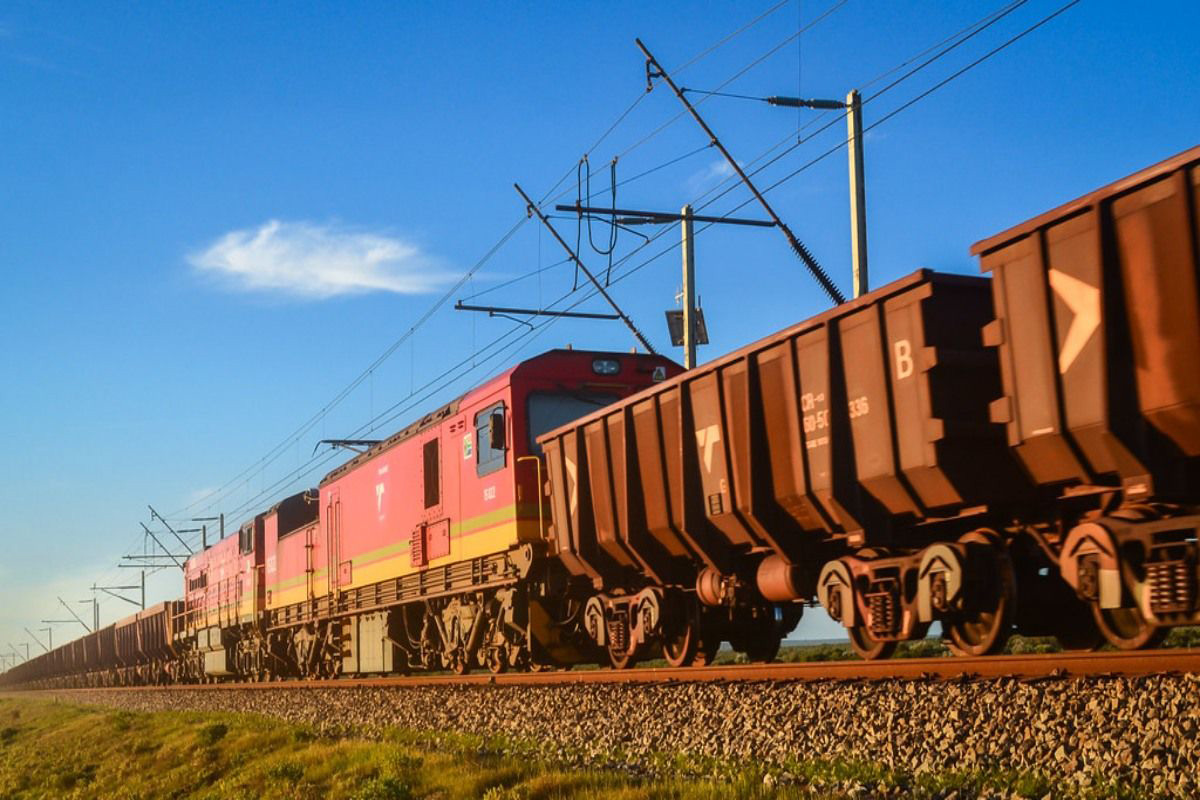
The initiative was led by TFR’s Train Design Technology and Operations teams in collaboration with Transnet Engineering, the Transnet Rail Infrastructure Manager (TRIM) and the Railway Safety Regulator. The exercise was undertaken as a dynamic train evaluation programme with the dual objective of pursuing a world record and advancing technical knowledge in train design, train handling and operational performance.
The record train comprised 696 empty CR13/14 wagons configured in a Radio Distributed Power (RDP) arrangement and hauled by a combination of Class 15E electric and Class 43D dieselelectric locomotives. Through RDP technology, locomotives positioned throughout the train operate as a synchronised unit, enabling the controlled distribution of traction and braking forces across the train’s entire length.
This advanced technology is critical in managing the significant longitudinal forces generated by trains of this scale, ensuring safe train handling, enhanced operational stability and reduced stress on both rolling stock and rail infrastructure.
The operation was preceded by extensive planning, modelling and simulation work conducted by Train Design Technology specialists. Teams assessed train dynamics, locomotive placement, route readiness, operating strategies, communication protocols and infrastructure requirements to ensure the safe movement of the train. Specialist personnel accompanied the train throughout its journey to monitor train-handling performance and operational behaviour. In addition, locomotive data collected during the run will be analysed against simulation results to validate performance models and further enhance TFR’s operating capability.
