

Malvern Engineering Works entered the South African engineering landscape in June 1947 as a small general workshop focused on servicing the mining industry from a base in Germiston, Gauteng. Over the subsequent decades the business expanded its product range from simple fabricated and refurbished components to specialised mineral processing equipment.
The family-owned company was started by Samuel Wilson, before his son Brian Wilson took over the running of the company. His sons, Craig and Peter Wilson, then joined the business and Peter Wilson still serves as the CEO while Craig took up an opportunity with one of Malvern Engineering’s Licensors and is now based in Brisbane, Australia.
Malvern Engineering Works now delivers a portfolio of magnetic separators, heavy media drums, centrifuges, suspended magnets, demagnetising coils, sampling equipment and bespoke process machinery along with associated services including field maintenance, laboratory trials and component refurbishment.
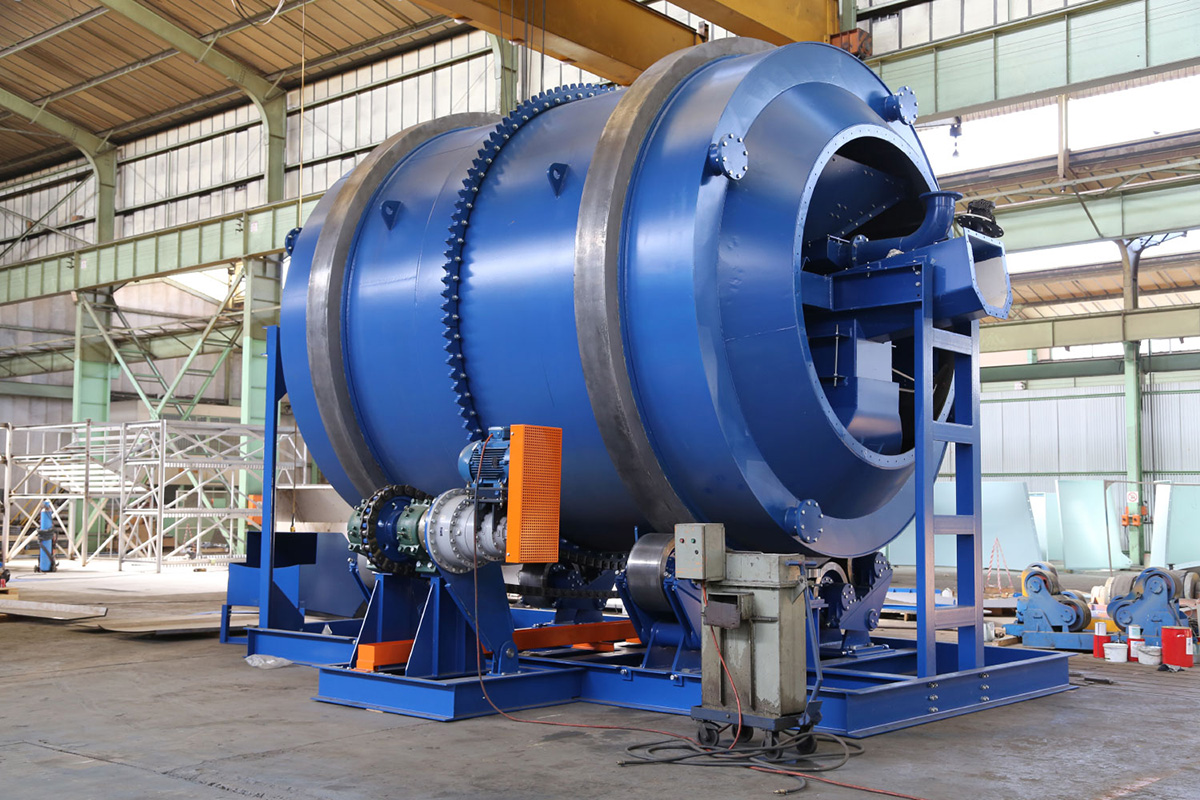

Malvern Engineering’s Heavy Media Drum is a cutting-edge solution designed for efficient and precise separation in mineral processing applications. The drums are customised for diameter, shell thickness and liner materials to suit specific plant conditions and are available in diameters ranging from 1.8m to 4.2m and lengths from 1.8m to 5.4m. Image courtesy of Malvern Engineering
Malvern’s facilities cover more than 6 500m² of workshop floor space at their Germiston facility with a secondary branch in eMalahleni, Mpumalanga, that is used for maintenance on some of its process equipment. These sites house fabrication, assembly, testing and repair operations capable of producing more than 95% of the components used in the company’s equipment range. In-house design and product development, led by a strong team skilled in CAD-CAM and magnetic field modelling, are integral to this continuous product development.
Technical design capability was introduced in the early 1980’s when Malvern transitioned from general engineering, to engineering and manufacturing its own range of equipment. Since then, Malvern Engineering’s footprint has broadened through agency and licence agreements, including a long-standing relationship with Ludowici (later acquired by FLSmidth now known as FLS) for centrifuge technology. The firm has also established international alliances and owns or participates in several group companies to extend its manufacturing capabilities, testing and market reach, including units in Mexico, Mozambique and India.
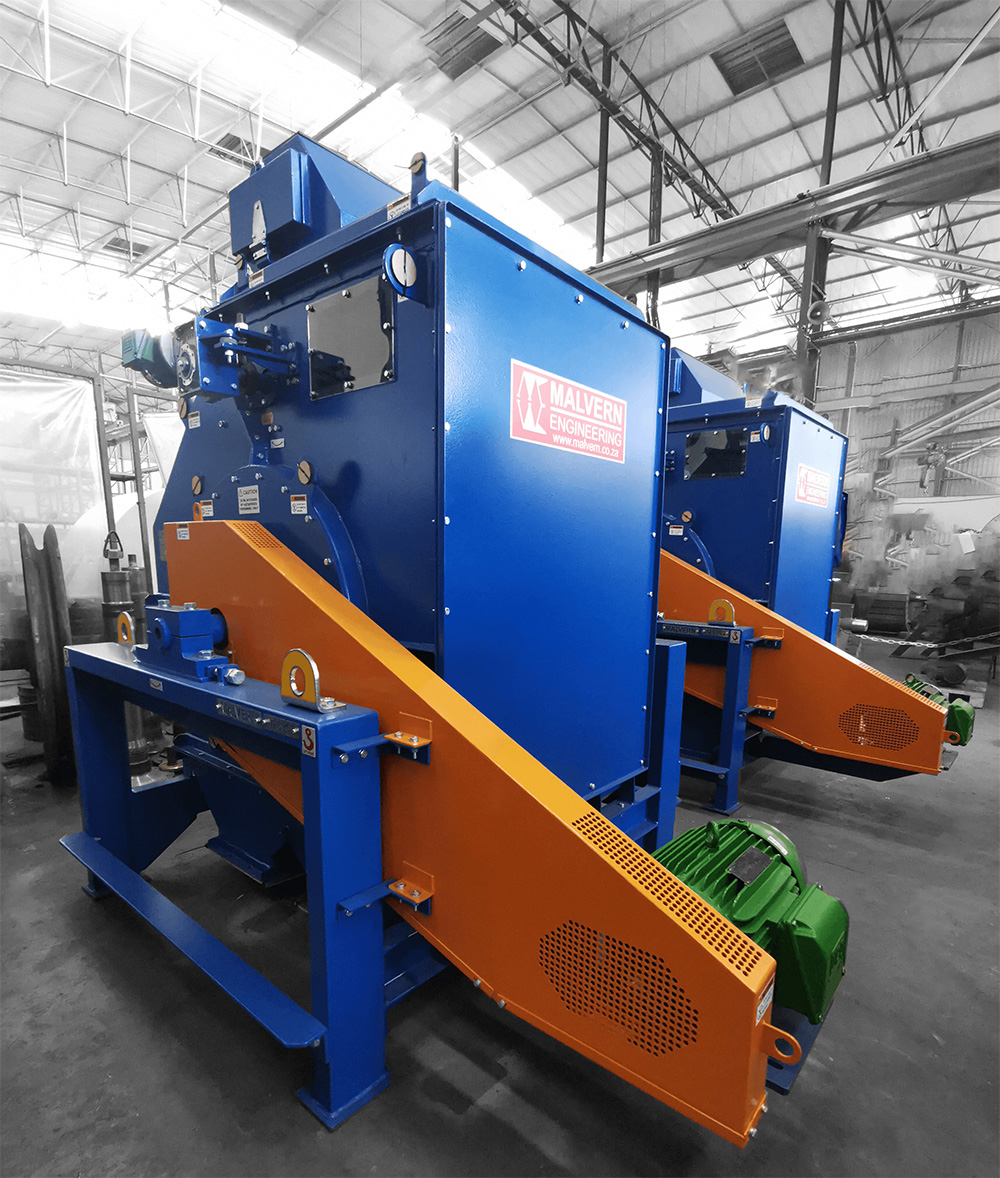

Malvern Engineering’s dry drum magnetic separator provides a cutting-edge solution for the efficient separation of magnetic and non-magnetic materials in dry processing applications. Image courtesy of Malvern Engineering
ISO 9001 quality systems are maintained across operations, and Malvern upholds compliance with formal quality standards as part of its production assurance it offers its customers. Its personnel include mechanical and process engineers, metallurgists, welders and machinists. The company also promotes structured safety and environmental practices as part of its operating procedures.
Magnetic separation technology
“Magnetic separators remain a core aspect of Malvern’s product range,” says Greg Morley-Jepson, Malvern Engineering’s Managing Director. These magnetic separators are deployed mainly across the mineral beneficiation, coal preparation and material handling industries for extraction of magnetic elements, tramp iron removal, and purification steps in processing streams. “When we started off in this area years ago it was mainly just on a small fabrication basis but we are now seen as a major player in this area and we hold a dominant position in Southern Africa for these products,” continued Morley-Jepson.
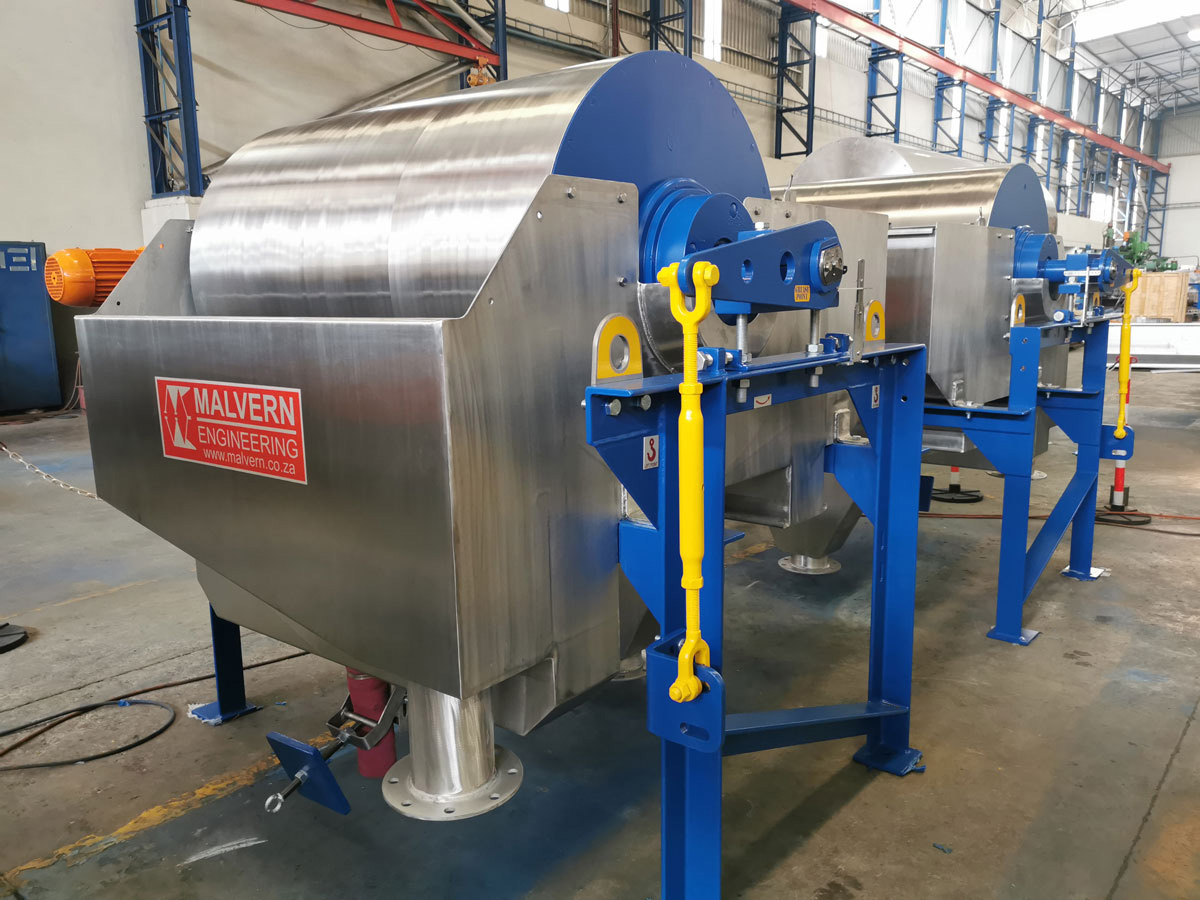

Malvern Engineering’s wet drum magnetic separators are high-efficiency magnetic separation systems that ensure effective recovery of magnetic materials from slurries. Image courtesy of Malvern Engineering
He explains that over the years the company has invested heavily into research and development in this area. “We make use of the top of the range software to create models so that we can better understand what might happen in certain environments. We can then take these results and replicate them in our workshop. As a group company, Malvern Engineering has also always had a very adaptable business model in terms of the industries that we serve. As an example, some industries are cyclical in their nature and you will see a boom in orders when large capital investments take place. So you need to plan accordingly and we have built in various service agreements over the years to accommodate for these occurrences, and that has been part of the success of this business,” explains Morley-Jepson.
“We will receive a lot of our material in kit form but then we carry out all the necessary fabrication work on that material in-house. We have all the facilities to sand blast, weld, paint and passivate before final assembly and test runs are conducted.”
“I can say with confidence that in my time of working here we have never had to retrench one person working here and that is testament to the type of business model that we run here. We also have a lot of long-serving people here and that really is something to be proud of.”
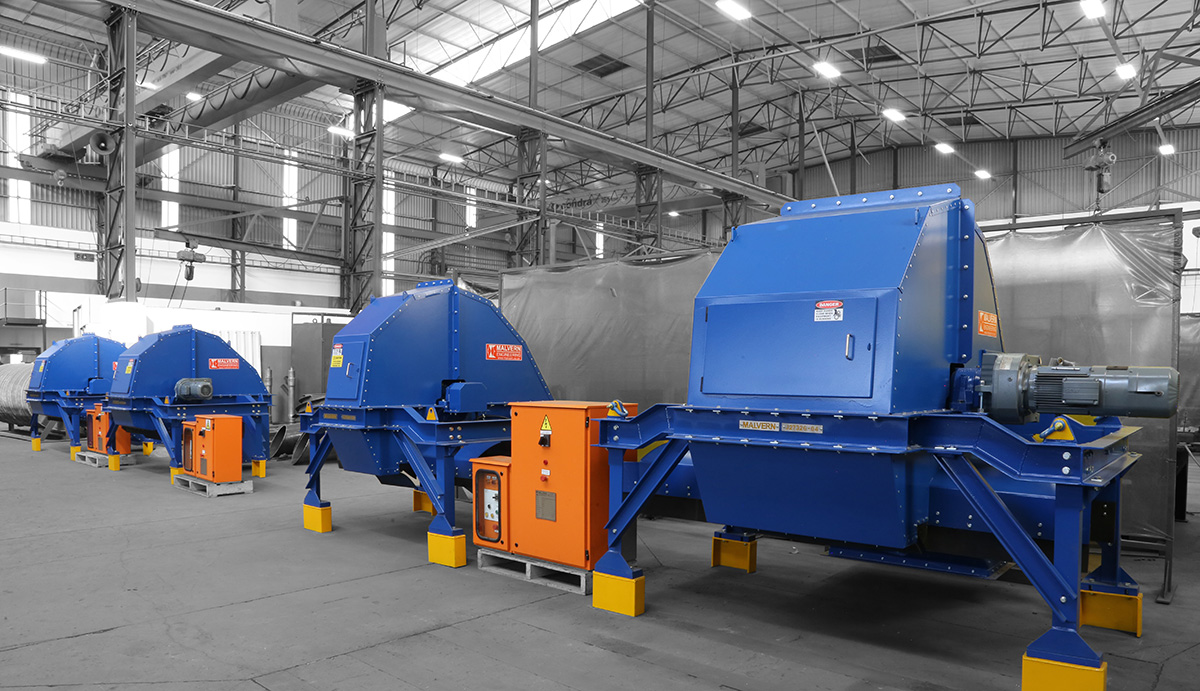

Sampling systems form another technical segment of Malvern Engineering’s fabrication abilities. They fabricate cross belt samplers, rotary sample dividers and variable split sample dividers. Image courtesy of Malvern Engineering
Malvern Engineering’s magnetic separators are supplied in low, medium and high intensity configurations with materials selected based on environment and process demands – typically 304 and 316 stainless steels for wet and corrosive conditions. Malvern is however proficient in fabricating with mild steel and other materials too.
Wet drum magnetic separators
Wet drum magnetic separators are designed to separate magnetic particles from liquid suspensions. Two main configurations exist in Malvern’s offering: low intensity units using ceramic magnetic circuits and medium intensity units employing rare earth elements. These separators handle dense media circuits, magnetite recovery and scavenging of magnetic ores. Tanks can be arranged in counter-rotation, concurrent or counter-current flow patterns to suit varying slurry characteristics and applications. The design includes flow distribution mechanisms, underflow control devices, adjustable scraper assemblies, water repulp and purge to optimise separation performance and throughput. Malvern can fabricate magnetic drums with diameters to suit industry norms with drum lengths up to 3.66m wide but do also fabricate customer specific options to align with bespoke plant feed capacities and layout.


Malvern Engineering’s Suspended Permanent and Electromagnetic Separator provides a reliable solution for separating ferrous contaminants from non-magnetic materials in various industrial processes. Image courtesy of Malvern Engineering
These units serve heavy media separation, dense media cyclone circuits and recovery systems. They operate on the principle that magnetic particles attach to the rotating drum surface as slurry passes across the magnetic field, then discharge separately from non-magnetic particles. Specifications such as pole configuration, gap height and tank style are matched to feed characteristics such as density, particle size and desired recovery rates.
Dry drum and magnetic roll separators
Dry drum magnetic roll separators remove magnetic materials from weakly or non-magnetic bulk feeds in dry applications. Typical applications span silica, quartz, ilmenite and garnet separation as well as contamination removal in ceramics, chemicals and heavy mineral sands processing. Designs utilise ferrite magnets for low intensity scalping and rare earth neodymium-iron-boron (NdFeB) magnets for medium to high intensity separation.


Malvern Engineering’s Demagnetising Coils are precision-engineered solutions for eliminating residual magnetism in ferrous and non-ferrous materials. By utilising electromagnetic technology, these coils restore materials to their natural state, improving downstream processing and reducing wear on equipment. Image courtesy of Malvern Engineering
Roll diameters range from around 100mm to 300mm with roll widths up to 1.5m or more depending on configuration and feed requirements. Roll intensity ranges from approximately 2 000G for ferrite circuits up to 11 000 – 13 000G for rare earth circuits. Customised feed systems and drives are provided to deliver consistent material distribution across both drum or rolls. Construction materials include stainless steel and mild steel housings with all material contact surfaces supplied in stainless steel, PTFE-coated belts, and dust-free enclosures where required for sensitive industries.
Suspended magnets and tramp metal removal
To protect plant equipment and improve product quality, Malvern Engineering supplies suspended magnetic separators. These suspended electromagnets and permanent magnets operate above conveyor belts or within chutes to capture tramp ferrous metal. DC-powered, oil-cooled coils generate a magnetic field that lifts and holds metal pieces as bulk material flows beneath. “The purpose of the magnet is to protect downstream equipment, by the extraction of rogue steel components such as liner plates, picks, roof bolts, hand tools, etc. which can enter the process plant and cause damage to equipment.” Maintenance provisions, self-cleaning configurations and capacity matched to conveyor widths are part of the design considerations.
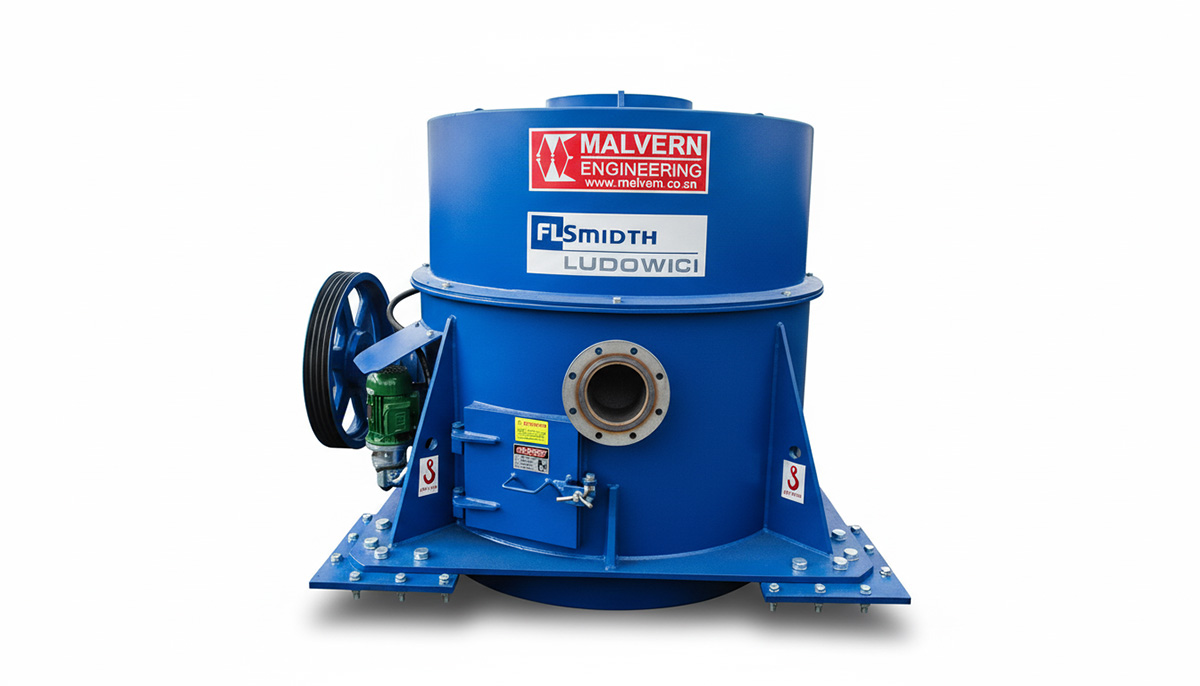

Malvern Engineering manufactures fine and coarse coal centrifuges suited for dewatering coal. These machines subject slurry feeds to rapid centrifugal forces to separate solids from liquids. Image courtesy of Malvern Engineering
Centrifuge systems
Under licence with FLS, Malvern manufactures, services and repairs centrifuges suited for dewatering coal. These machines subject slurry feeds to rapid centrifugal and vibrating forces to separate solids from liquids. Both coarse and fine coal applications are catered to, with machine selection based on particle size distribution, feed solids content and target moisture levels. Centrifuges are engineered with rotary wedge wire baskets, conveyor scrolls, seals and bearings, with material selection to withstand abrasive slurries. After-sales support includes spares, installation assistance and maintenance guidance.
Malvern’s centrifuge business is another core aspect of their business where the company has established themselves as a significant player and seen them realise a lot of success in terms of market reach over the years explains Morley-Jepson.
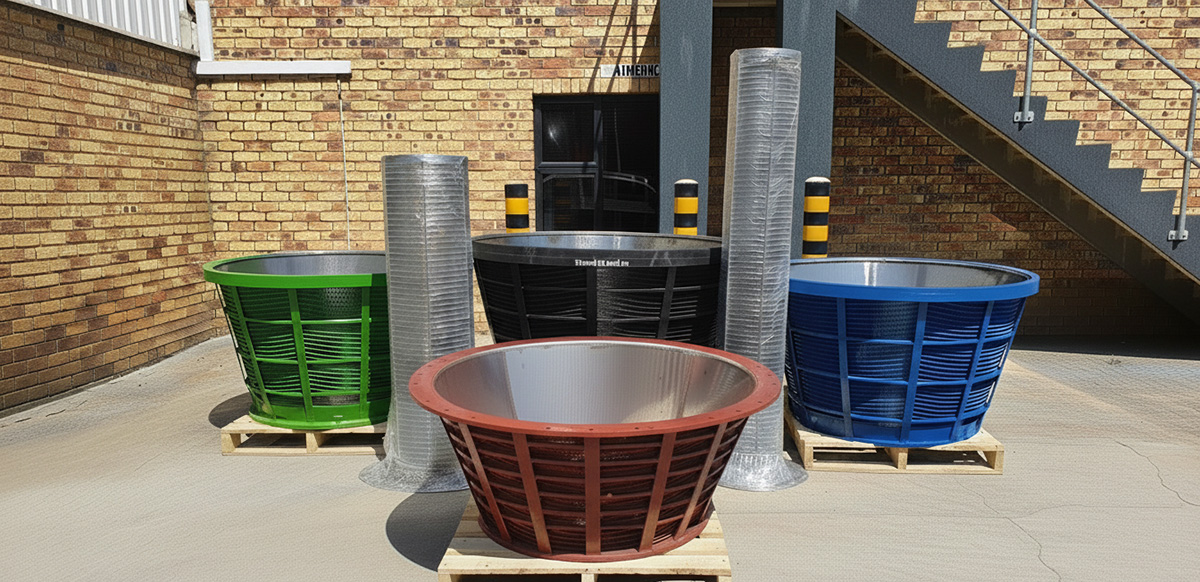

Wedge Wire Industries was established in 2005. Having started off exclusively manufacturing centrifuge baskets for Malvern Engineering, the company has expanded its product range to include sieve bends, NKM screens, flat panel screens and water well screens, ranging across a variety of industries from mining to construction and water treatment. Image courtesy of Malvern Engineering
Malvern Engineering established a subsidiary business, Wedge Wire Industries in 2005. The business was setup to manufacture Malvern Engineering’s centrifuge baskets but has subsequently expanded to manufacture sieve bends, NKM screens, flat panel screens and water well screens, ranging across a variety of industries from mining to construction and water treatment.
Heavy media drum separators
Heavy media drums are used where density-based separation is required. In coal and mineral beneficiation circuits, dense media such as ferrosilicon or magnetite suspensions provide a medium where light material floats and heavy material sinks. Drum separators continuously recover magnetic media from slurry which is returned for reuse in the dense media system. Malvern Engineering’s locally fabricated drums are customised for diameter, shell thickness and liner materials to suit specific plant conditions and are available in diameters ranging from 1.8m to 4.2m and lengths from 1.8m to 5.4m.
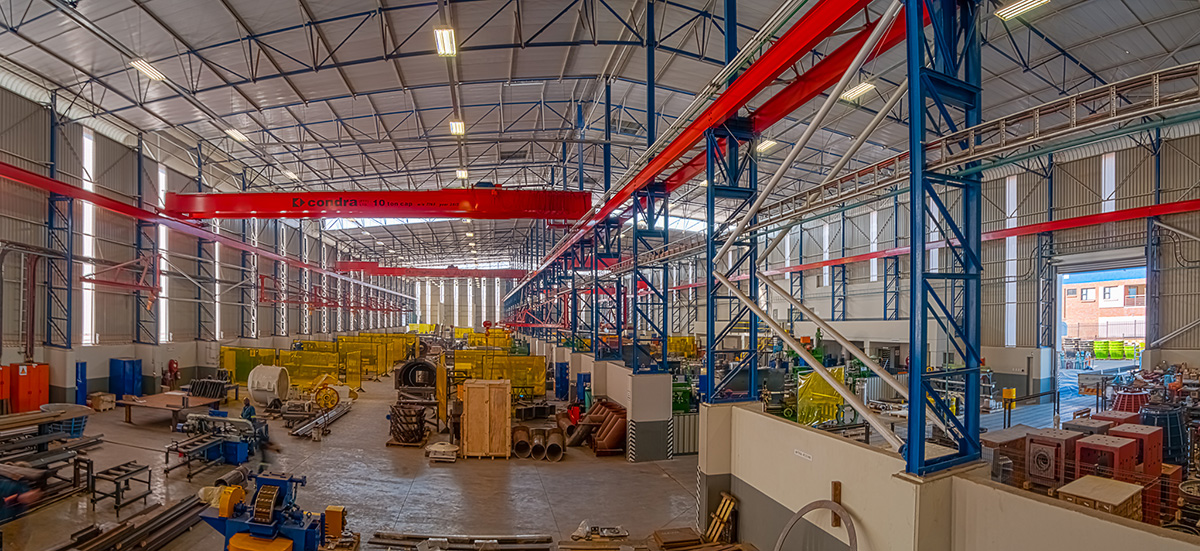

A view of Malvern Engineering’s fabrication facility. Image courtesy of Malvern Engineering
The product line for heavy media includes units applied in coal, iron ore, chromite, and manganese operations to name a few. Engineering input includes drum design, media containment, magnetic circuitry and interface with dense media cyclone circuits. Morley-Jepson says that over the years, Malvern-Engineering has developed unique in-house methods and fabrication secrets when it comes to manufacturing these drums.
Demagnetising and sampling equipment
Following magnetic separation, residual magnetism in recovered media or products can interfere with downstream processing. Malvern Engineering supplies demagnetising coils in a range of sizes and electrical configurations for this purpose. These coils produce alternating magnetic fields to remove residual magnetisation from ferrous and non-ferrous materials restoring materials to their natural state before subsequent beneficiation stages.
Sampling systems form another technical segment of Malvern Engineering’s fabrication abilities. Cross-belt samplers, rotary sample dividers and variable split dividers are engineered to extract representative material for quality control. These devices are fabricated with wear-resistant materials and precision components to provide consistent sample sizes across production streams. Cross-belt samplers can be fabricated to accommodate a 1 500mm wide conveyor belt.
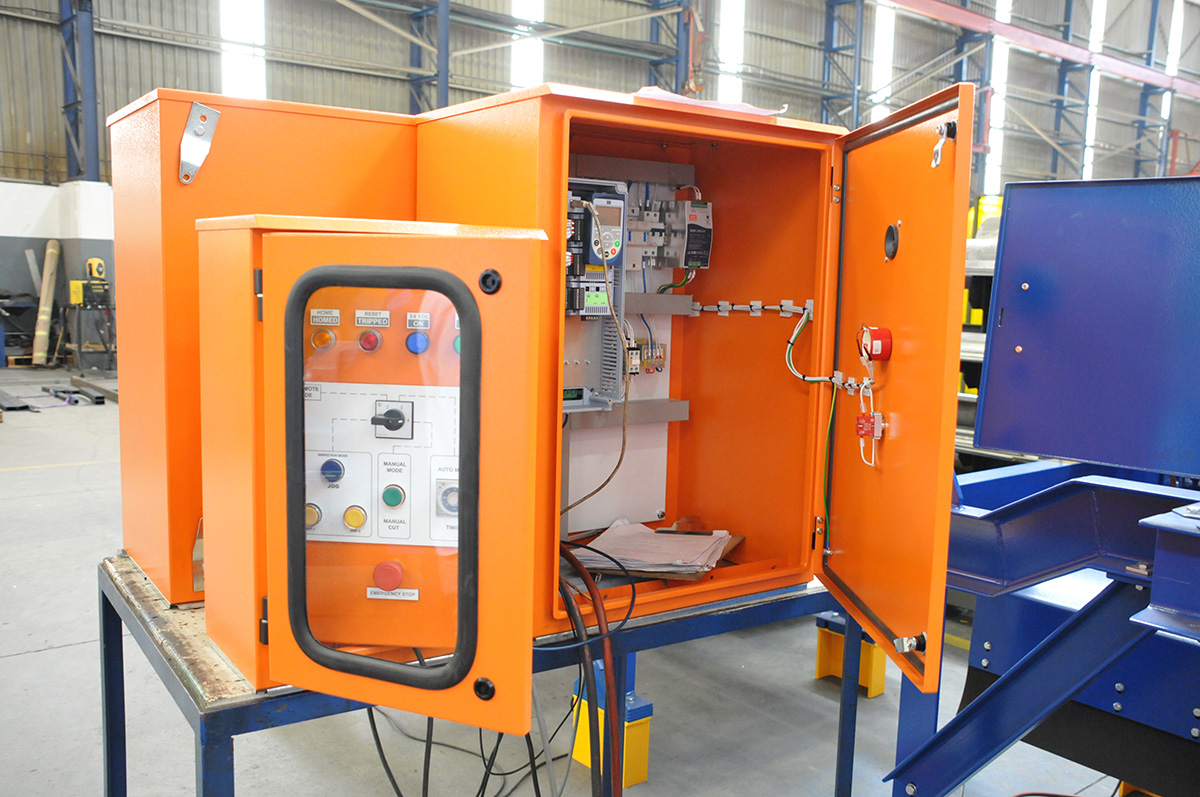

Malvern Engineering supply their products as turnkey solutions. This includes fabrication and assembly of all electrical components and housings
Laboratory testing and pilot trials
Malvern Engineering maintains a dedicated laboratory testing facility at its Germiston head office. The facility is equipped with pilot-scale magnetic separation machines (wet and dry) including rare earth roll and drum separators. Clients can supply material samples for feasibility trials and process optimisation studies. Laboratory tests establish performance metrics such as recovery efficiency, throughput and magnetic field interactions under controlled conditions. These data informs full-scale equipment selection and tuning before site installation.
For situations where larger pilot units are required, Malvern Engineering conducts field trials by diverting a portion of plant feed through mobile pilot equipment. This allows real-time evaluation on client sites with measurable results that scale to commercial installations, all handled by Malvern Engineering’s team of technical specialists.
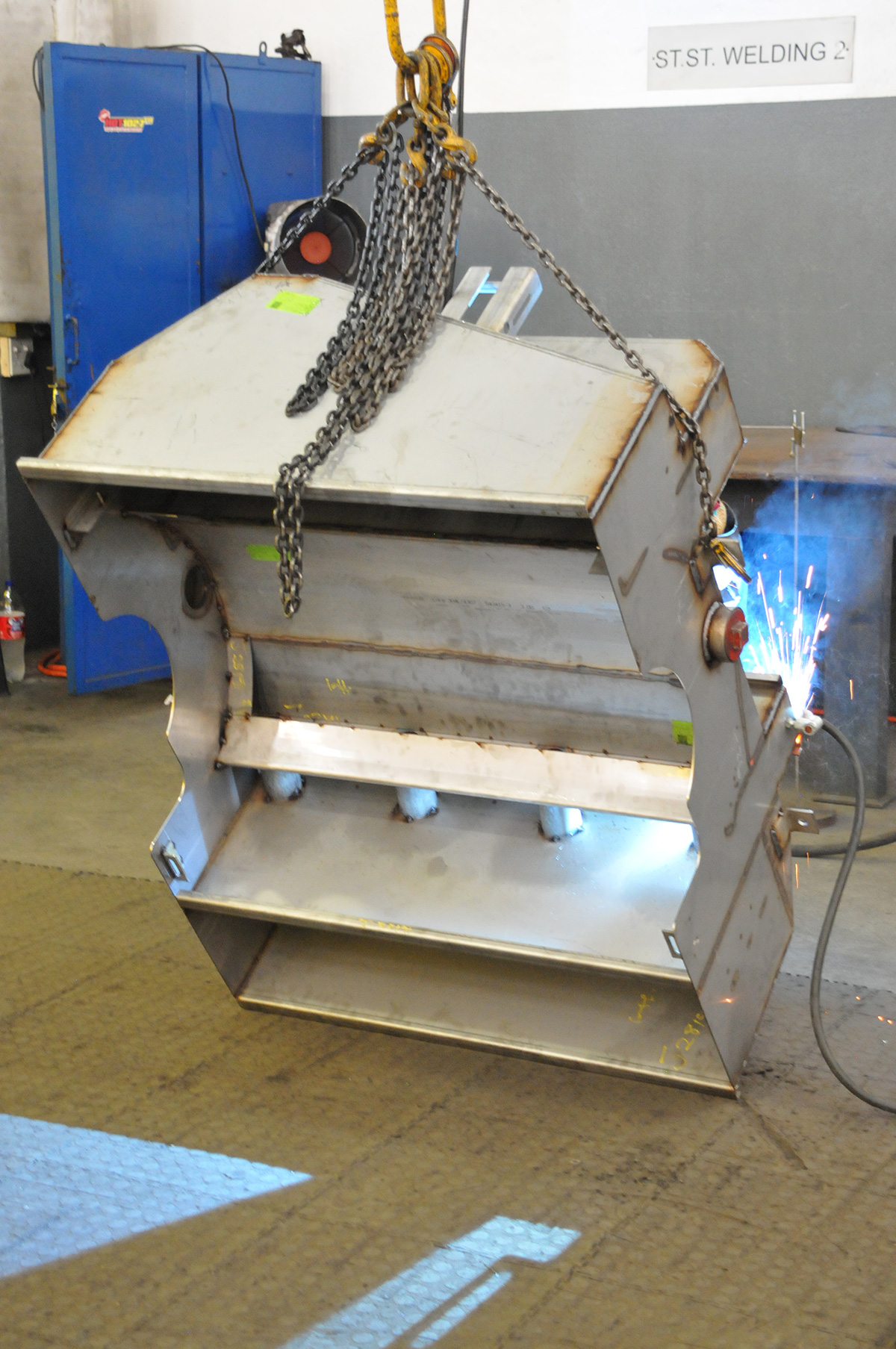

Fabrication takes place in Malvern Engineering’s more than 6 500m2 warehouse at their Germiston facility with a secondary branch in eMalahleni, Mpumalanga, that is used for maintenance on some of its fabricated products
Services: maintenance, repair and retrofits
Field service teams provide scheduled maintenance and corrective repairs either under comprehensive annual maintenance contracts or on an ad-hoc basis. Teams are trained to handle both Malvern-branded machines and equipment from other manufacturers. Detailed plant audits identify mechanical or process bottlenecks and provide corrective strategies, while onsite fabrication capability supports replacement component manufacturing.
A dedicated repair and refurbishment division restores aged magnetic equipment to original specification. This service extends machine life and enables organisations to manage expenditures as operating costs rather than capital projects. Retrofits may include updated control systems, upgraded magnets or redesigned components to align older equipment with current performance standards.
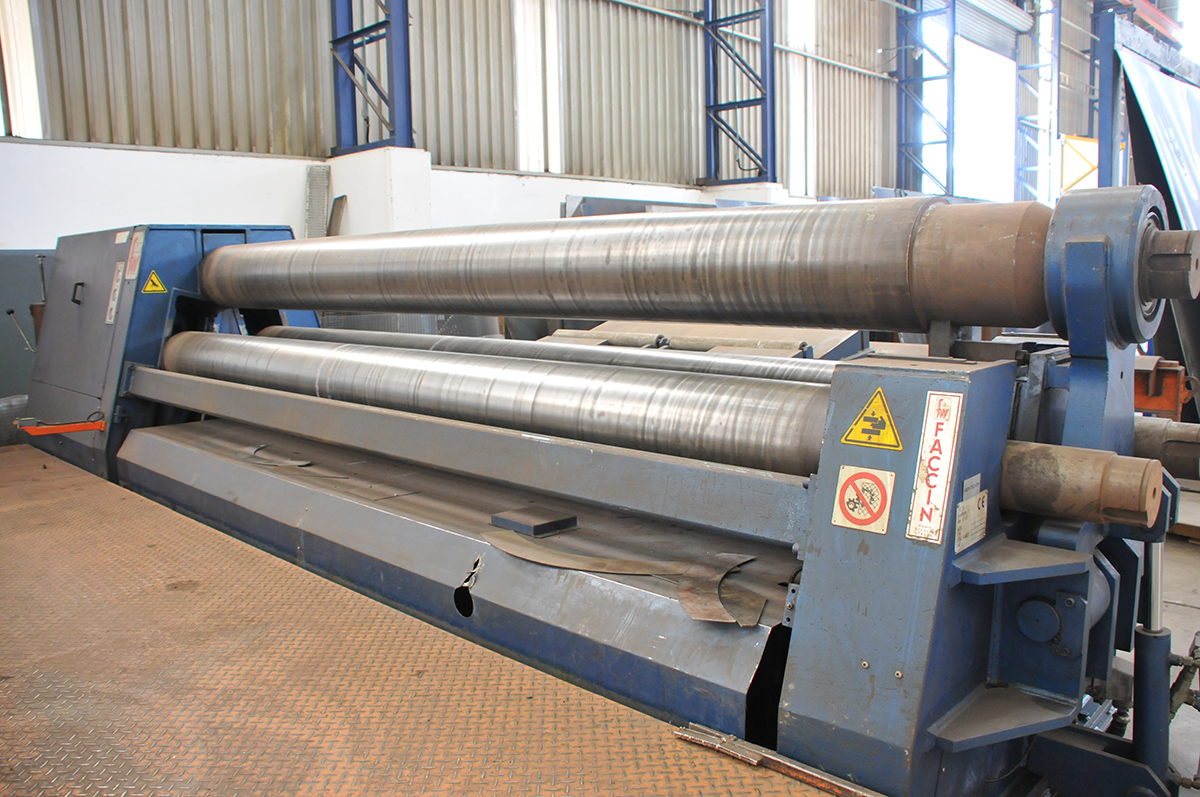
Fabrication takes place in meticulous order from raw material to finished components – with shot blasting and painting all taking place at Malvern Engineering’s warehouse. Pictured is a Faccin 3-plate roller used for fabrication of rolled components
Sector footprint and material handling impact
Malvern Engineering’s products serve a broad range of sectors besides mining – from bulk materials handling to chemical and mineral processing as well as the food processing and recycling industries. Magnetic separators protect crushers, conveyors and screens from tramp metal while improving product quality. Sampling systems integrate with quality assurance processes, and heavy media drums link with density separation circuits in beneficiation plants.
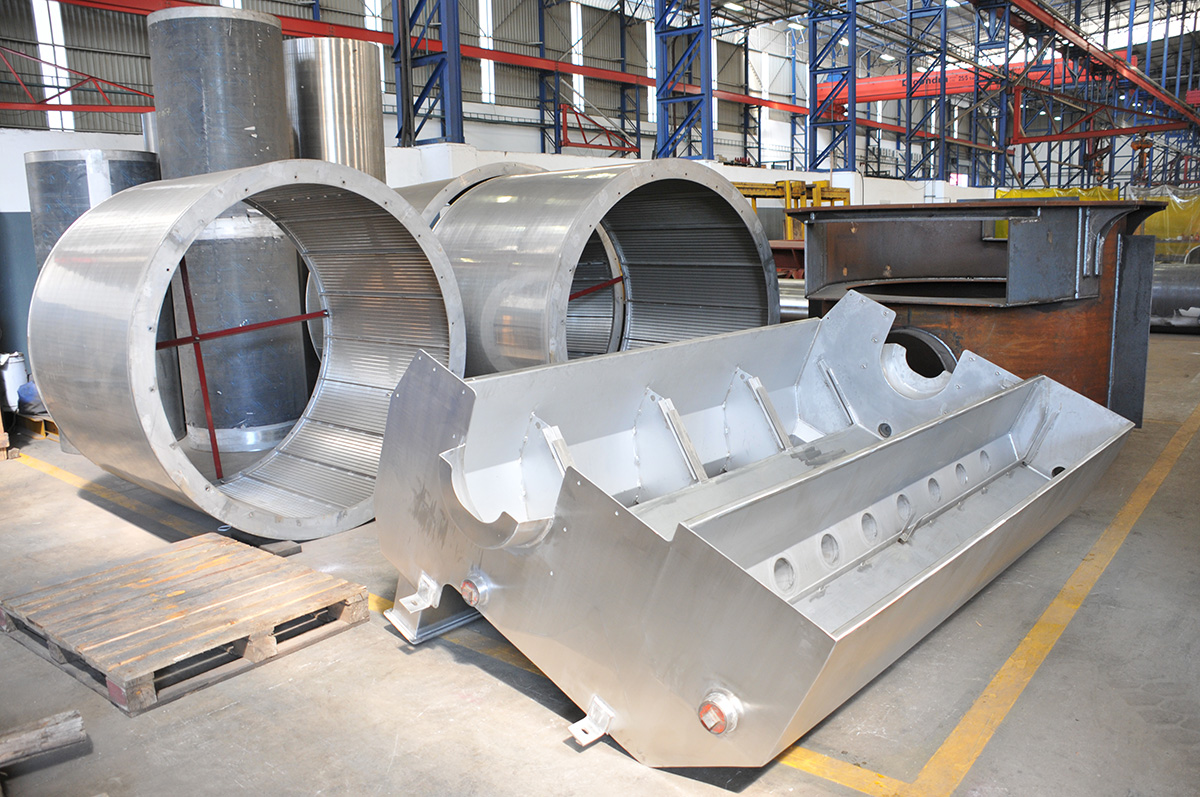
Components at various stages of fabrication wait to move further along the assembly line
From its early history as a general workshop to its current status as a diversified engineering provider, Malvern Engineering Works has built its reputation supported by technical capability, in-house fabrication and process understanding. The company’s continued investment in design tools, laboratory testing and service infrastructure reflects its role in supporting mineral and material processing operations throughout Southern Africa and beyond.
“Peter and I have spent many hours travelling the world building this business. We’ll never take it out of South Africa but we certainly want to keep building our export markets and to do this you need to see the people that matter and be a presence on the ground in those regions. I can’t tell you how important it is to do this. Over and above this, you have to convey an image that reflects in the products and components that you manufacture, and that’s something that Malvern Engineering has been known for. You also can’t do this alone and we have worked hard at building a strong and loyal team to help us keep taking this business forward,” concludes Morley-Jepson.
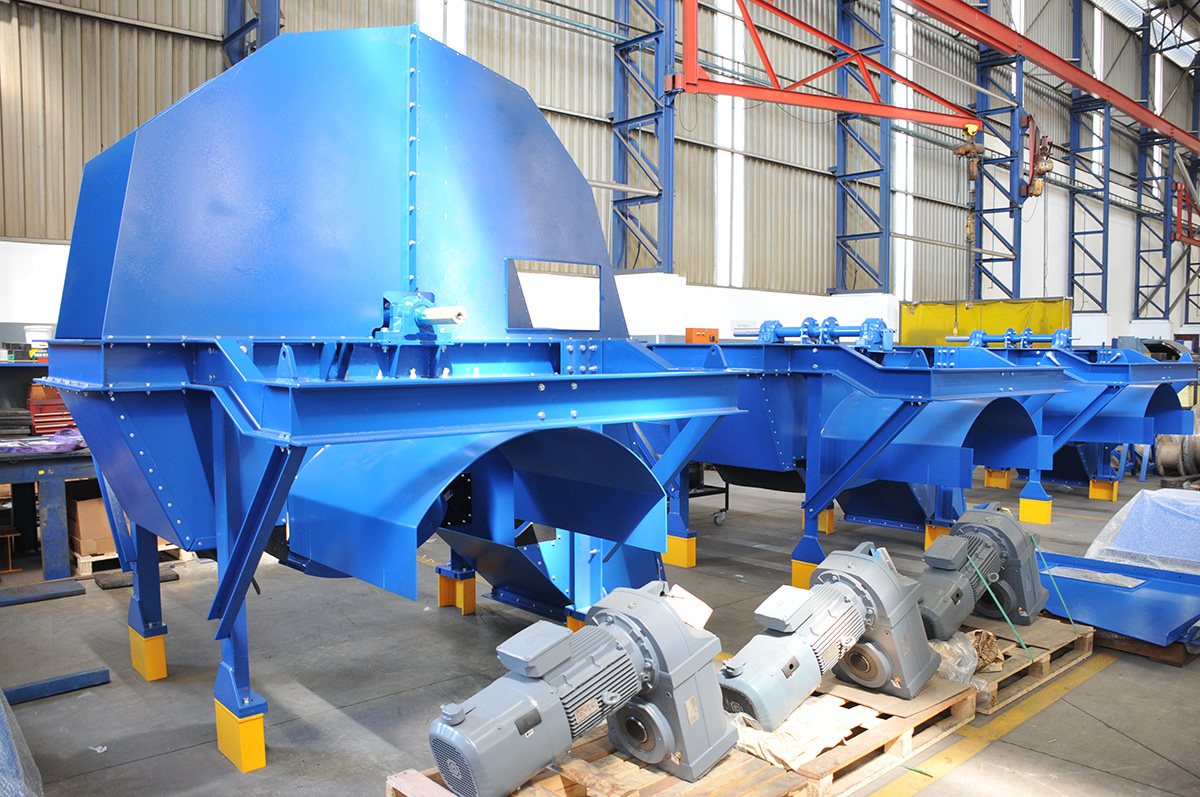
All of Malvern Engineering’s components are assembled and tested on site at their fabrication facility before being freighted to customers
Malvern Engineering employs approximately 150 people between its Germiston and eMalahleni facilities, and as a group company, approximately 800 people. Malvern Engineering maintain a presence in South Africa, Mozambique, Australia, India and Mexico.
For further information contact Malvern Engineering on TEL: +2711 873 9010 or visit https://www.malvern.co.za